Team Goemkarponn
Panaji: A recent study by scientists at the CSIR–National Institute of Oceanography (NIO), Goa, has revealed that glacial periods significantly intensified volcanic eruptions and hydrothermal activity along mid-ocean ridges (MORs), contributing to increased release of carbon dioxide into the oceans.
The research, led by CSIR–NIO Director Prof Sunil Kumar Singh along with scientists Sayantan De and Robin John, examined a 49,000-year-long sediment record retrieved from the Carlsberg Ridge in the Indian Ocean. The analysis aimed to understand how glacial–interglacial sea-level variations influenced volcanism and hydrothermal processes on the ocean floor.
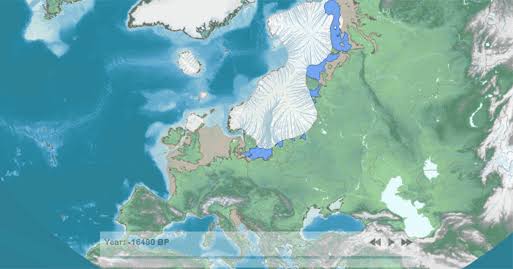
Prof Singh explained that the findings establish a strong connection between glaciation and enhanced volcanic activity. During ice-age periods, falling sea levels reduced pressure on the seabed, triggering more frequent volcanic eruptions along mid-ocean ridges. This, in turn, strengthened hydrothermal circulation systems, resulting in a greater transfer of carbon dioxide into the ocean.
To reconstruct past hydrothermal activity, the team studied trace elements and lead (Pb) isotope signatures preserved in ferro-manganese (Fe–Mn) oxyhydroxide coatings found on sediment cores. According to Singh, this marks the first-ever Pb isotope record derived from Fe–Mn coatings at an active mid-ocean ridge in the Indian Ocean, providing valuable long-term insights into how sea-level changes regulate hydrothermal systems at slow-spreading ridges.
The study showed that deep-sea sediments near MORs contain a combination of hydrothermal deposits, volcanic material and land-derived debris. By analysing trace metals such as cobalt, nickel and chromium, along with Pb isotope ratios in the Fe–Mn coatings, the researchers identified distinct chemical signals that document the link between glacial phases and increased volcanic activity.
The findings suggest that hydrothermal systems at slow-spreading mid-ocean ridges are highly sensitive to climate-driven sea-level changes. Lower sea levels during glacial periods lessen the pressure on the ocean crust, thereby enhancing volcanic and hydrothermal activity, with lasting effects on ocean chemistry.
Prof Singh added that similar patterns of increased hydrothermal output during glacial low sea-level phases have also been documented at several other ridge systems worldwide, including the East Pacific Rise, Juan de Fuca Ridge, Mid-Atlantic Ridge, Central Indian Ridge and the Tianxiu Vent Field of the Carlsberg Ridge.