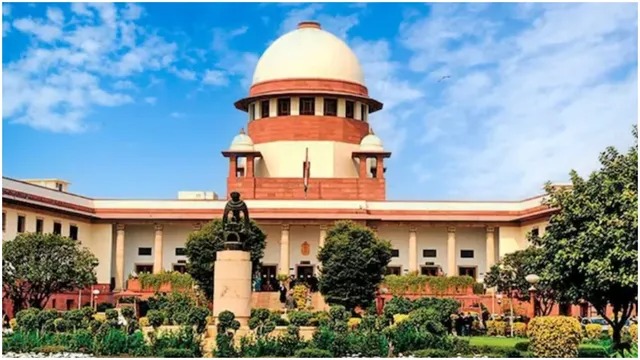
New Delhi: As Delhi grapples with extreme air pollution, the Supreme Court has advised lawyers and parties-in-person to use hybrid mode for court appearances. In an order issued on December 14, Chief Justice of India Surya Kant recommended that members of the Bar and litigants avail themselves of video conferencing facilities for hearings, given the severe air quality in the capital. The directive also hints at the possibility of shifting hearings entirely to virtual mode if conditions worsen.
Delhi’s air pollution has reached alarming levels, with the Air Quality Index (AQI) recorded at 461 on Sunday, marking the second-worst December day on record. In some areas, readings approached the 500 mark, the upper limit tracked by the Central Pollution Control Board (CPCB). By late afternoon, 38 out of 39 active air quality monitoring stations across the city reported ‘severe’ pollution. Localities such as Rohini touched 500, while Ashok Vihar, Jahangirpuri, and Mundka recorded AQI readings of 499.
Authorities have implemented strict measures under the Graded Response Action Plan (GRAP), with the Commission for Air Quality Management (CAQM) invoking Stage IV controls. This includes a ban on all construction and demolition activities across Delhi-NCR to mitigate pollution levels amid adverse weather conditions.
The CPCB categorises AQI from 401 to 500 as ‘severe’, posing serious health risks, particularly for children, the elderly, and individuals with respiratory issues. Citizens have been urged to limit outdoor exposure, use masks, and monitor air quality updates closely.
The Supreme Court’s advisory aims to protect the health of legal professionals and litigants while ensuring judicial proceedings continue with minimal disruption. Legal experts can now participate in hearings via video, reducing the need for travel in Delhi’s hazardous conditions.
This move underscores the growing impact of air pollution on daily life and institutional operations in the capital, highlighting the need for continued vigilance and preventive measures.
Sorry, there was a YouTube error.