New Delhi: The Supreme Court on Thursday stayed the Bombay High Court’s recent order acquitting all 12 accused in the 2006 Mumbai train bomb blasts case, which had claimed the lives of over 180 people and left hundreds injured.
A bench comprising Justices M M Sundresh and N Kotiswar Singh issued a notice to all the acquitted individuals, clarifying that the High Court’s judgment would not be treated as a legal precedent. However, the apex court did not order the re-arrest of the released accused.
The development came while the top court was hearing a petition filed by the Maharashtra government, challenging the High Court’s verdict delivered earlier this week. On Monday, a division bench of Justice Anil Kilor and Justice Shyam Chandak of the Bombay High Court had quashed the convictions, observing that the prosecution had “utterly failed” to prove the charges and that it was “hard to believe the accused committed the crime.”
During the Supreme Court hearing, Solicitor General Tushar Mehta, appearing for the state, requested a stay on the High Court’s findings—not to send the accused back to prison, but to ensure that the legal conclusions of the verdict do not impact other ongoing cases, particularly under the Maharashtra Control of Organised Crime Act (MCOCA).
The Supreme Court, while agreeing to consider the implications, noted that some of the acquitted individuals are Pakistani nationals, a point raised by Justice Sundresh after going through the case files.
The High Court had observed that the evidence presented, including explosives, arms, and maps, appeared unrelated to the actual blasts, and that the prosecution failed to even establish the type of explosives used. The bench ordered the release of all accused, provided they were not wanted in any other case.
The acquittal had sparked political and public reactions. Former Maharashtra Chief Minister Devendra Fadnavis had termed the verdict “shocking” and confirmed that the state would move the Supreme Court, which has now stayed the effect of the judgment.
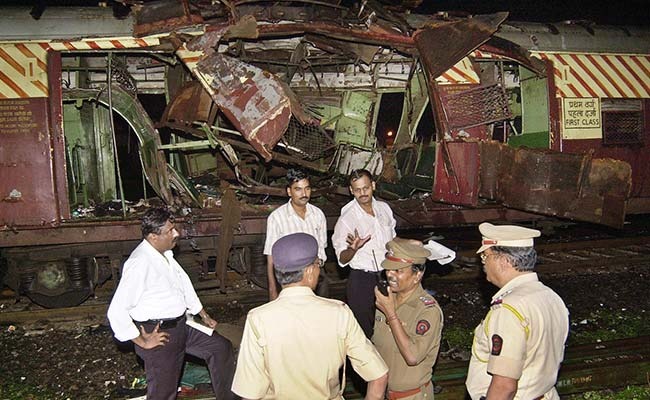
The 2006 Mumbai train blasts occurred on July 11, when seven bombs exploded within an 11-minute span during peak evening hours. The explosives, concealed in pressure cookers, were placed in the first-class compartments of local trains on the Western line, with blasts occurring at Matunga Road, Mahim Junction, Bandra, Khar Road, Jogeshwari, Bhayandar, and Borivali.
In 2015, a special MCOCA court had convicted the 12 men. Five of them — Faisal Sheikh, Asif Khan, Kamal Ansari, Ehtesham Siddiqui, and Naveed Khan — were sentenced to death, while the other seven were handed life imprisonment for their role in planning and executing the coordinated attacks.
With the Supreme Court now stepping in, the final outcome remains pending as legal proceedings continue.
Sorry, there was a YouTube error.