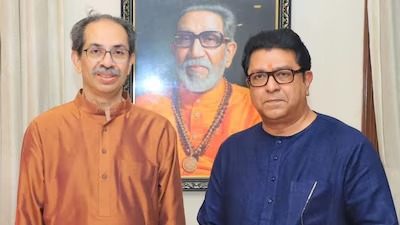
Mumbai: In a major political development with significant implications for Maharashtra’s civic elections, cousins Uddhav Thackeray and Raj Thackeray have decided to reunite after nearly 20 years of political estrangement. The decision marks the end of a long-standing split that began in 2005 and reshapes the political landscape ahead of crucial municipal polls, including those to the Brihanmumbai Municipal Corporation.
The reunion is being seen as a calculated move aimed at consolidating the Marathi vote, which has traditionally formed the backbone of both leaders’ political support. Party insiders indicate that the alliance will involve coordinated seat-sharing arrangements between Uddhav Thackeray’s Shiv Sena (UBT) and Raj Thackeray’s Maharashtra Navnirman Sena, with both parties contesting strategically important wards across Mumbai and other urban centres.
Uddhav and Raj Thackeray parted ways two decades ago after sharp differences over leadership and the future direction of the Shiv Sena. Raj Thackeray’s exit and the formation of the MNS led to years of rivalry, often resulting in divided votes that weakened their collective political influence, particularly in civic elections.
Political observers believe the changing dynamics in Maharashtra have prompted the cousins to reassess their positions. Municipal bodies, especially the BMC, are seen as vital power centres that shape governance, funding, and grassroots political networks. A united front could help counter stronger rivals and prevent vote fragmentation that has previously worked to the advantage of opposing parties.
The rapprochement did not come suddenly. Over the past year, Uddhav and Raj Thackeray have appeared together at public events and rallies, notably on issues related to language, identity, and regional pride. These shared platforms were widely interpreted as early signals of improving relations and possible political coordination.
Analysts say the alliance also reflects a broader recognition that emotional divisions of the past may no longer serve electoral interests in a rapidly evolving political environment. By coming together, the cousins hope to project unity, revive their traditional support base, and regain relevance in urban local governance.
As Maharashtra heads into an intense civic election season, the reunion of the Thackeray cousins is expected to be closely watched. Whether this renewed partnership can translate into electoral success on the ground remains to be seen, but it has undeniably altered the political conversation and raised the stakes in the upcoming municipal battles.