By Pradeep Padgaonkar
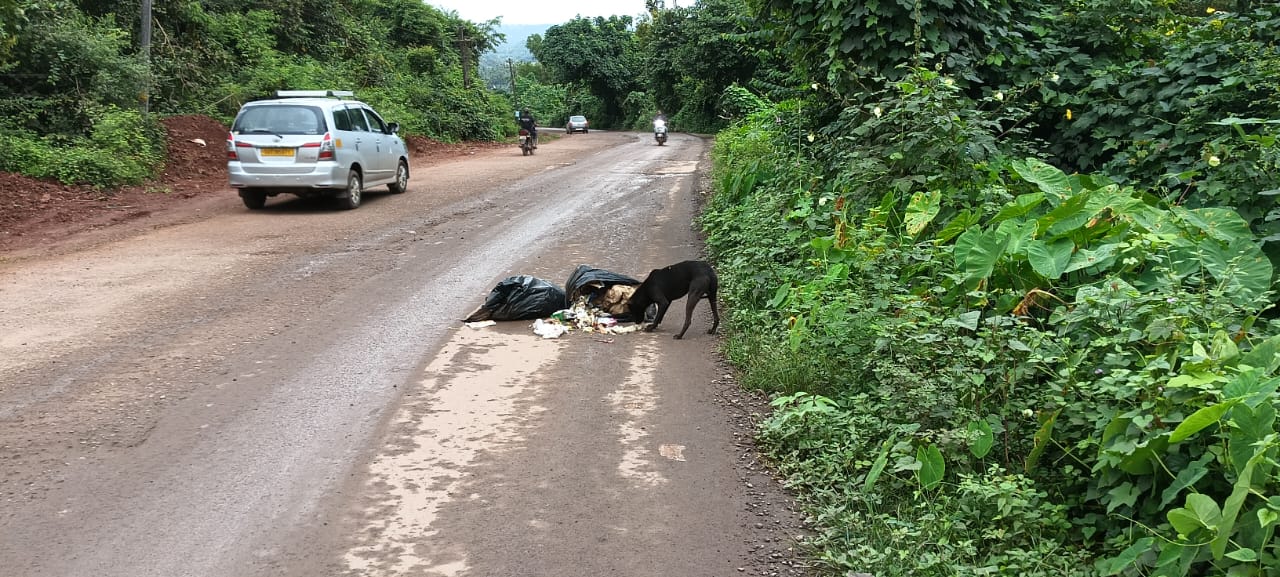
The other morning, while driving past Saligao, I came across a sight that has sadly become all too familiar in Goa. Two oversized plastic bags, stuffed with household waste, had been flung in the middle of the road. A street dog was busy tearing them apart, scattering the contents further, while passing motorists swerved to avoid both the animal and the filth. For many, this was nothing unusual. For me, it was a moment that summed up the larger malaise we suffer from: a culture of apathy dressed up as progress.
Saligao is home to the state’s largest garbage treatment plant. It was built with much fanfare, meant to be the model facility that would solve Goa’s mounting waste problem. The plant has done its bit, but it is now stretched far beyond its capacity. Trucks from half the state unload there daily, and yet, the more garbage that is cleared, the more it seems to multiply. The authorities are quick to blame infrastructure, and citizens are quicker to blame the authorities. The truth is that neither side is innocent.
It is easy to point fingers at “illiterate villagers” or “outsiders” for the mess. But let us be clear: this casual act of tossing garbage in public spaces is not restricted to the poor or the uninformed. On the contrary, the biggest culprits are often educated people who live in well-painted houses, drive shiny cars, and work in respectable professions. They, too, find it convenient to tie up their waste in plastic bags and abandon them on street corners, in fields, or near drains. Out of sight, out of mind.
This mindset is what truly corrodes the state. Goa prides itself on its beaches, villages, and landscapes, yet we behave as though these gifts are disposable. We complain when garbage piles up, we lament when tourists litter, but we seldom pause to look at our own contribution to the mess. Education was supposed to make us more responsible. Instead, it has made us more sophisticated in justifying our irresponsibility.
What is worse is the near-total absence of shame. Garbage lies in full public view, and yet, no one is bothered. The stench mixes with the air, the plastic seeps into the soil, and the dogs and cattle rummage through what we discard. And still, we pass by as if it were someone else’s problem.
Goa’s garbage crisis is not about infrastructure alone. It is about character. Until we, the people, learn that the road is not our dustbin, no plant in Saligao or anywhere else will ever be enough. The fight against filth begins not with technology but with conscience. And in this fight, it is not the dog tearing the garbage bag that is to blame, but the human who threw it there.