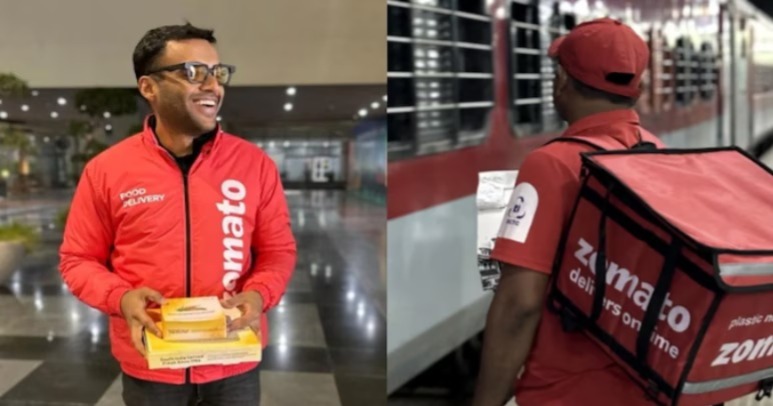
New Delhi: Zomato co founder Deepinder Goyal has strongly defended the gig work model, presenting detailed data to counter criticism following recent strikes by delivery partners in late December. Addressing concerns around wages, work pressure and welfare, Goyal outlined why he believes the platform offers a fair balance between income and flexibility.
On earnings, Goyal stated that Zomato delivery partners earned an average of Rs 102 per hour in 2025, excluding tips. This marked an increase from Rs 92 per hour in 2024, reflecting a nearly 11 percent year on year rise. He explained that while most partners work part time, a full time equivalent calculation shows that working around 10 hours a day for 26 days a month could generate gross monthly earnings of about Rs 26,500. After accounting for fuel and maintenance costs, estimated at 20 percent, net earnings would be close to Rs 21,000 per month. Tips, he added, go entirely to delivery partners with no deductions and are transferred instantly.
Goyal stressed that gig delivery is designed as supplementary income rather than a conventional full time job. According to platform data, the average partner worked only 38 days in the entire year, with about seven hours logged on each working day. Only a small fraction, around 2.3 percent, worked more than 250 days in the year. He argued that demanding benefits such as provident fund contributions or guaranteed salaries does not align with the structure of gig work, which allows partners complete freedom over when and where they choose to work.
Responding to safety concerns linked to quick delivery promises, Goyal said delivery partners are not shown countdown timers or pressured to rush. He noted that average delivery speeds remain modest, with Blinkit orders averaging just over two kilometres and Zomato deliveries averaging around 21 kilometres per hour.
He also highlighted that over Rs 100 crore was spent in 2025 on insurance and welfare measures, including accident cover, medical insurance, maternity benefits, tax filing support and pension schemes. Concluding his remarks, Goyal said the gig model offers a reasonable trade off for a role with low entry barriers, flexibility and additional support systems in place.
Sorry, there was a YouTube error.