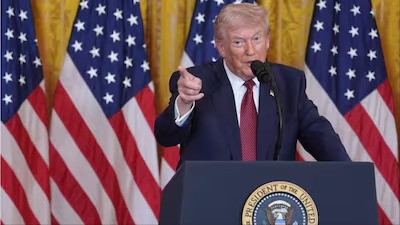
Washington: Former US president Donald Trump has said that a second American aircraft carrier will be sent to the Middle East in response to escalating tensions with Iran. Trump made the announcement in comments that underline growing concern in Washington about Iran’s recent actions in the region and reflect a more aggressive posture on security.
Trump specified that the USS Gerald R. Ford, one of the most advanced ships in the United States Navy, would be redeployed to bolster the US military presence. The former president framed the move as necessary to deter what he described as provocative behaviour by Iranian forces and to protect American interests and allies in a volatile strategic theatre.
The deployment of a second carrier group to the Middle East marks a significant escalation in the US naval footprint. Aircraft carriers and their accompanying strike groups are among the most powerful tools available to project force, conduct surveillance and provide rapid response options in conflict zones. The decision signals a willingness to use enhanced military leverage as part of a broader strategy to manage tensions.
Trump’s announcement drew reactions from analysts who said sending another carrier could have implications for diplomatic efforts and regional stability. Supporters of the move argued that a strong presence is essential to preventing miscalculations by Iran, while critics cautioned that increased militarisation carries risks of unintended escalation.
The backdrop to this decision includes a series of recent incidents in the Gulf and surrounding waters, where US forces and Iranian-linked groups have clashed indirectly or exchanged hostile signals. These flashpoints have prompted concern in capitals around the world, with Washington looking to reassure partners and safeguard key maritime routes.
The USS Gerald R. Ford is equipped with advanced radar, defensive systems and a complement of aircraft that can support a range of missions, from air superiority to ground strikes. Its deployment would join another carrier group already in the region, amplifying US naval capability amid heightened alert levels.
Trump tied the deployment to broader criticism of past administrations’ handling of Iran policy, asserting that a firmer stance was needed to counter Tehran’s influence in Iraq, Syria and Yemen. He characterised the move as part of a comprehensive approach to curb threats before they mature into direct confrontations.
Military officials have yet to release detailed timelines or operational specifics regarding the carrier’s transit and expected activities once it reaches the area of operations. Typically, such deployments involve coordination with regional allies and logistical planning to ensure sustained presence and readiness.
Observers noted the symbolic weight of deploying a second carrier, as it sends a message of resolve not just to Iran but to other actors monitoring US military commitment. How Tehran interprets the move could shape diplomatic and security dynamics in the coming weeks, with the potential for either de-escalation through deterrence or intensified posturing.
As discussions continue in Washington and allied capitals, the world will be watching how this expanded naval presence influences the broader geopolitical landscape in the Middle East and whether it contributes to a reduction in tensions or fuels further uncertainty.