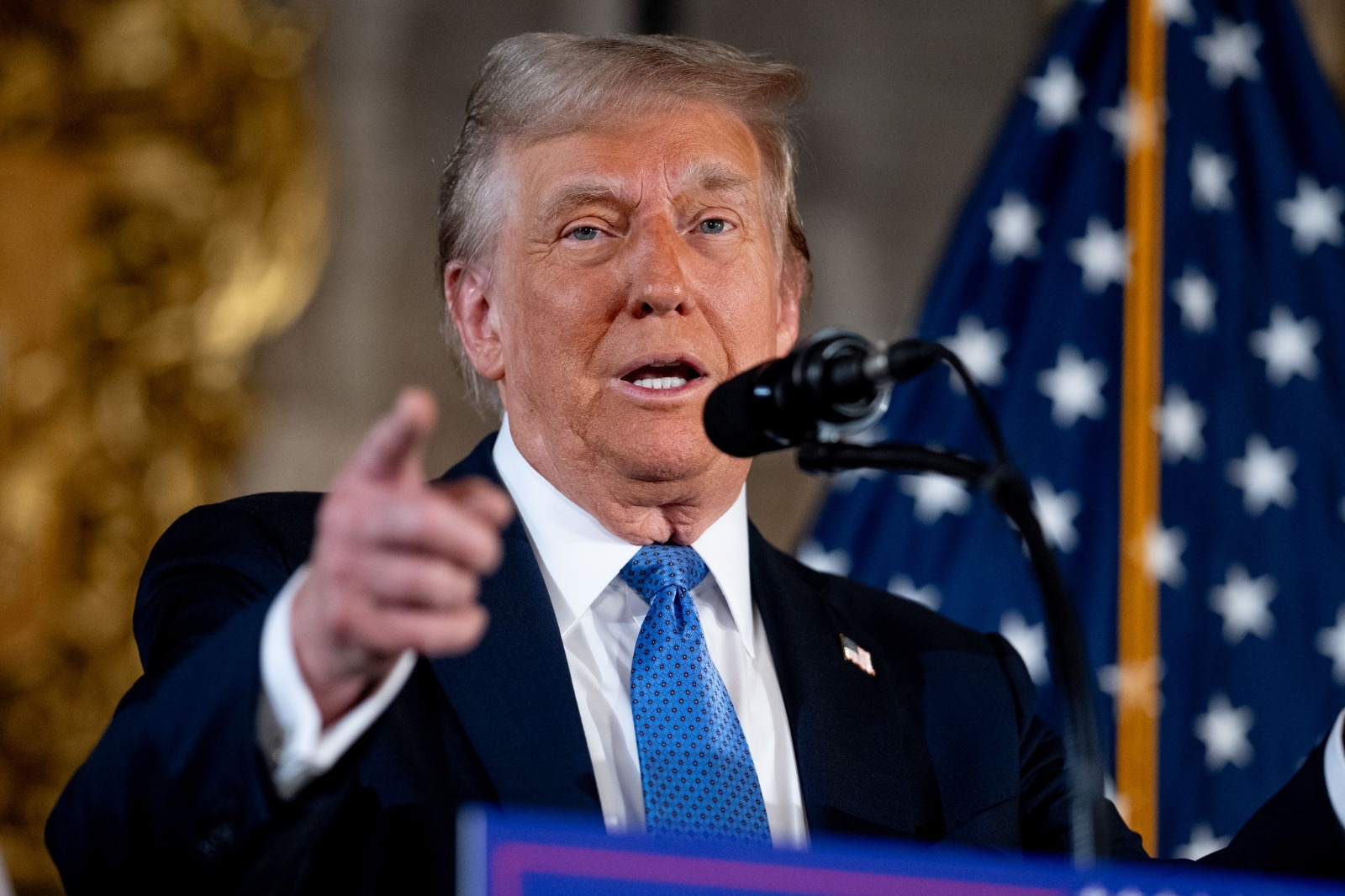
Washington: Former US President Donald Trump said he would not impose tariffs on European countries, including Denmark, despite earlier threats linked to disagreements over Greenland, signalling a retreat from a move that had unsettled transatlantic allies.
Trump made the announcement after meeting NATO Secretary-General Mark Rutte on the sidelines of the World Economic Forum in Davos. He said the discussions had resulted in an understanding on future cooperation related to Arctic security, prompting him to drop plans for trade penalties.
The US leader had previously warned that Washington could impose tariffs on imports from several European nations if they refused to engage in talks concerning Greenland, a semi-autonomous territory under Danish sovereignty. Trump has repeatedly argued that Greenland holds strategic importance for the United States, particularly in the context of Arctic security and growing geopolitical competition in the region.
Under the earlier proposal, the United States was expected to levy a 10 percent tariff on goods from countries such as Denmark, Germany, France, the United Kingdom, Sweden and the Netherlands from February, with the possibility of steeper duties later in the year. The announcement had drawn sharp reactions across Europe, with leaders cautioning against the use of trade measures to exert political pressure.
In his latest remarks, Trump said he would not proceed with the tariff plan, though he offered few details about the framework discussed with the NATO chief. He reiterated that the United States remained interested in strengthening security arrangements in the Arctic but said there was no intention of using force.
Denmark and Greenland have consistently rejected any suggestion that the territory could be transferred or sold, maintaining that decisions about Greenland’s future rest solely with its people. European officials have also stressed that sovereignty issues should not be linked to trade relations.
The decision to step back from tariffs is expected to ease immediate tensions between Washington and its European partners, many of whom had warned that the move could damage NATO unity and disrupt already fragile global trade ties.