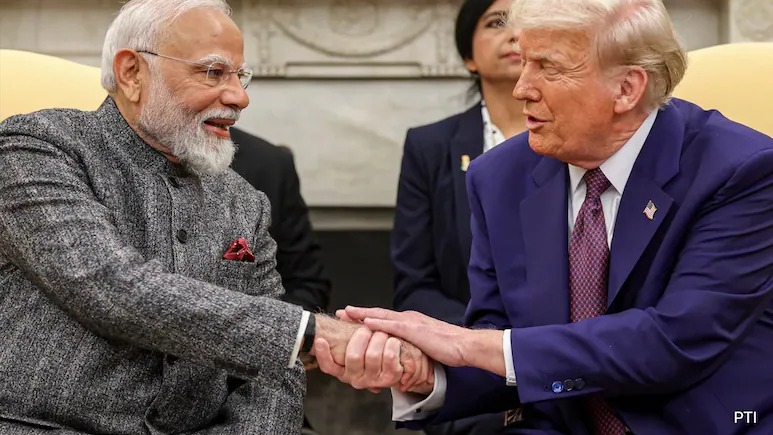
NEW DELHI: Even as the United States rolled out fresh tariff threats against 14 countries, President Donald Trump on Tuesday declared that Washington is “close to making a deal” with India, signaling a possible breakthrough in long-drawn trade negotiations between the two nations.
At a press event, Trump said, “We’ve made a deal with the United Kingdom, we’ve made a deal with China, we’re close to making a deal with India… Others we met with, we don’t think we’re going to be able to make a deal. So we just send them a letter.” His comments came as the US moved to impose higher tariffs on key trading partners, including South Korea, Japan, Bangladesh, and Thailand, with the new rates set to kick in from August 1.
The proposed trade deal with India—often dubbed a “mini deal”—has faced hurdles over contentious issues, primarily the US demand for access to India’s dairy and agricultural markets. New Delhi has held firm, refusing to compromise on sectors that impact rural livelihoods, food safety, and small-scale farmers.
The US has pushed for India to allow imports of genetically modified crops and dairy products from hormone-treated cattle—conditions that India has traditionally opposed due to domestic sensitivities and public health concerns.
Agriculture, which supports nearly half of India’s 1.4 billion population despite accounting for only 16% of GDP, remains a politically and economically sensitive area. Cheaper imports could hurt local producers, potentially creating political backlash and providing ammunition for opposition parties.
India, meanwhile, is seeking substantial tariff cuts from the US on its labor-intensive exports such as garments, footwear, and leather goods—key sectors for job creation. Without meaningful concessions, officials argue, the goal of doubling bilateral trade to $500 billion by 2030 remains unlikely.
Indian negotiators are said to be resisting any deal that doesn’t include reciprocal benefits, especially as such an agreement could set a precedent for future trade talks with other partners. New Delhi has traditionally kept agriculture out of free trade agreements, and any shift in this position may trigger calls for similar access from other countries.
Despite the standoff, both sides are reportedly working to narrow the deal’s focus to mutually acceptable tariff reductions on select items. Officials on both ends have emphasized the need to cut overall duty barriers to pave the way for sustainable trade growth.
With rising global protectionism and shifting geopolitical alliances, the success or failure of this potential deal could have lasting consequences—not just for US-India economic ties, but for global trade dynamics in the months ahead.
Sorry, there was a YouTube error.