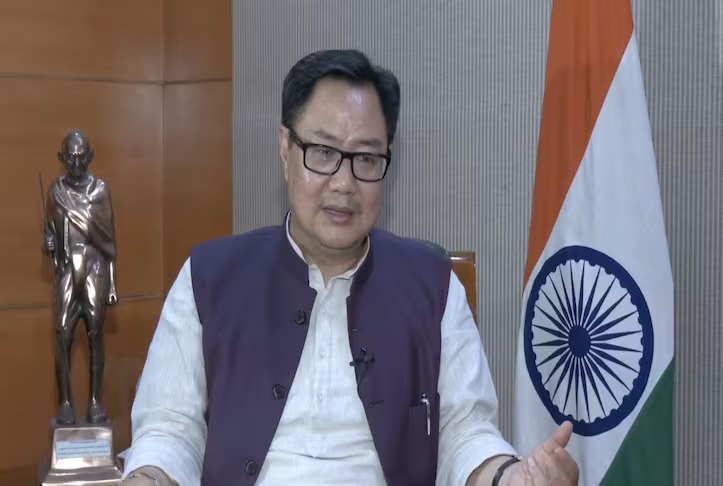
New Delhi: The ongoing debate over the amended Waqf law has reached a critical juncture, with Minority Affairs Minister Kiren Rijiju expressing confidence that the Supreme Court will refrain from interfering with the legislative process. This optimism comes amidst a backdrop of deepening controversy, particularly over Bengal Chief Minister Mamata Banerjee’s declaration that she will not implement the law in her state—a stance that has ignited discussions on constitutional authority.
In the heart of this legal and political storm, multiple individuals and organizations have taken the amended Waqf law to the Supreme Court, sparking a wider examination of fundamental rights and religious freedoms. The Supreme Court is scheduled to hear these petitions, marking a pivotal moment in this saga.
Minister Rijiju has underscored the importance of respecting the separation of powers between the government and the judiciary. This sentiment aligns with historical judicial norms that court intervention should only occur when constitutional matters are at stake. However, the Waqf Act’s contentious provisions, including the mandatory inclusion of non-Muslim members in Waqf bodies, have prompted claims of unconstitutional interference.
Mamata Banerjee’s refusal to implement the law mirrors her previous stances on the Citizenship Amendment Act and other central legislation. She is not alone; several other states are watching closely as this confrontation could set a precedent for state autonomy versus central authority. The BJP has emphasized that states cannot bypass central laws, citing constitutional amendments that clearly define governance powers at different levels.
The Opposition argues that the amended law threatens religious autonomy and undermines Muslim institutions. In contrast, the government maintains that the law aims to address long-standing property management issues and ensure that Waqf properties benefit the economically deprived sections of the Muslim community. As the country awaits the Supreme Court’s decision, the debate underscores the intricate balance between legislative authority and religious rights.
Sorry, there was a YouTube error.