


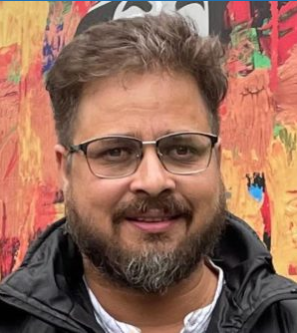
“But beyond personalities and immediate political theatre, this moment reflects a deeper malaise. Goa’s Opposition, despite repeated calls for unity, has consistently failed to act as a cohesive force. The issue is not merely ideological divergence. It is a pattern of mistrust, tactical one-upmanship, and an inability to prioritise collective strategy over individual positioning.
The timing of this latest fracture could not be more significant. With elections less than a year away, the expectation among voters is for an Opposition that can offer a credible alternative to the ruling party. Instead, what they see is fragmentation.”
The latest disruption in the Goa Assembly, culminating in the marshalling out of six Opposition MLAs while one chose to remain seated, has once again laid bare a persistent and uncomfortable truth: the Opposition in Goa continues to be its own weakest link.
At the centre of this episode is Vijai Sardesai, whose decision to stay back in the House while his colleagues were evicted has triggered a fresh round of accusations and counter-accusations. Leader of Opposition Yuri Alemao did not mince words, hinting at the presence of a “mole” within Opposition ranks. Similar criticism came from Viresh Borkar and Venzy Viegas, each questioning Sardesai’s intent and commitment.
But beyond personalities and immediate political theatre, this moment reflects a deeper malaise. Goa’s Opposition, despite repeated calls for unity, has consistently failed to act as a cohesive force. The issue is not merely ideological divergence. It is a pattern of mistrust, tactical one-upmanship, and an inability to prioritise collective strategy over individual positioning.
The timing of this latest fracture could not be more significant. With elections less than a year away, the expectation among voters is for an Opposition that can offer a credible alternative to the ruling party. Instead, what they see is fragmentation playing out in full public view. The optics are damaging. When Opposition members cannot even agree on how to protest inside the Assembly, it raises serious questions about their ability to govern together.
The immediate trigger for Monday’s chaos was the debate over the Goa Appropriation Bill and the enforcement of the model code of conduct for the Ponda bypoll. These are not trivial matters. They go to the heart of governance, financial accountability, and electoral fairness. Yet, the Opposition’s intervention, instead of strengthening scrutiny, ended up overshadowed by internal discord.
Sardesai’s decision to distance himself from the protest may have been tactical or principled, depending on one’s perspective. However, politics is as much about perception as it is about intent. In choosing not to stand with his colleagues at a moment of confrontation, he has reinforced the narrative that the Opposition lacks a united front. Whether or not this perception is fair, it is now firmly embedded in public discourse.
This is not the first time such divisions have surfaced. Goa’s political landscape has long been marked by shifting alliances and fragile partnerships. Smaller parties often wield disproportionate influence, but that influence is rarely channelled into building durable coalitions. Instead, it is used to carve out distinct political identities, even at the cost of weakening the broader Opposition space.
The ruling party, unsurprisingly, benefits from this disarray. A divided Opposition makes for easier legislative management and blunts the impact of dissent. More importantly, it shapes voter psychology. When the alternative appears fractured, the status quo begins to seem like the safer choice, regardless of its shortcomings.
What is particularly striking is that this pattern is not unique to Goa. Across the country, Opposition parties frequently struggle to bridge differences and present a unified challenge. Yet, in a small state like Goa, where the number of players is limited and political stakes are intensely local, the cost of division is even more pronounced.
If the Opposition hopes to remain relevant, it must move beyond rhetorical calls for unity. That requires hard political work: building trust, agreeing on common minimum programmes, and establishing mechanisms to resolve disagreements internally rather than in the public arena. It also requires a degree of political maturity, where leaders are willing to subordinate personal ambitions to collective goals.
The events in the Assembly should serve as a wake-up call. Voters are not merely looking for voices of protest; they are looking for coherence, consistency, and credibility. Without these, even the most legitimate criticisms of the government risk losing their impact.
In the months leading up to the next election, the Opposition in Goa faces a clear choice. It can continue along its current path, marked by episodic unity and frequent fractures, or it can attempt the far more difficult task of forging a genuine alliance. The former guarantees more of the same. The latter, while uncertain, at least offers the possibility of change.
For now, Monday’s episode stands as a reminder that the biggest challenge before Goa’s Opposition is not the ruling party. It is itself.
