Washington:
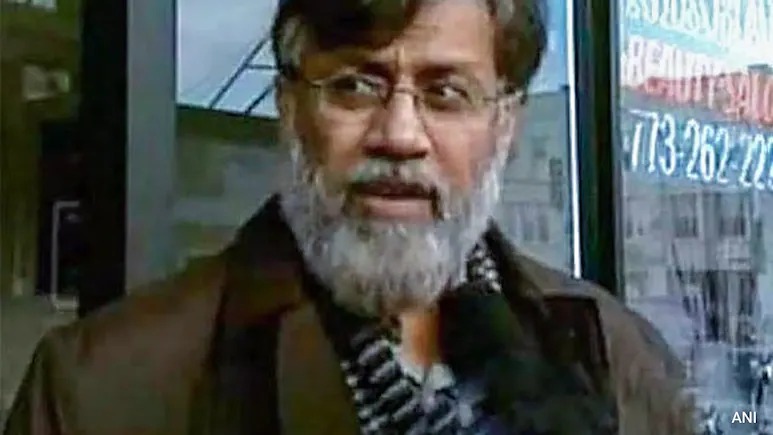
In a significant development in the pursuit of justice for the 2008 Mumbai terror attacks, the US Supreme Court has denied Tahawwur Rana’s petition to prevent his extradition to India. This decision sets the stage for Rana, a Pakistani-origin Canadian businessman, to be brought back to India to face trial for his role in the deadly attacks that claimed 166 lives.
A team from India’s National Investigation Agency (NIA) is scheduled to travel to the US on January 30 to complete the formalities for Rana’s extradition. This move marks a crucial diplomatic victory for India in its longstanding efforts to bring the perpetrators of the 26/11 attacks to justice.
Following the US Supreme Court’s denial of Rana’s appeal on January 21, the US State Department is now evaluating the next steps in his extradition process. The department has reaffirmed its long-standing support for India’s efforts to ensure that those responsible for the Mumbai terrorist attacks face justice.
Rana was previously convicted in the United States District Court for the Northern District of Illinois for providing material support to Lashkar-e-Taiba and for conspiracy to provide material support to terrorism in Denmark. His co-conspirator, David Headley, had pleaded guilty and cooperated against him in the case. Headley’s testimony was pivotal in revealing Rana’s involvement in the Mumbai attacks and his role in providing logistical and financial support.
The 26/11 Mumbai attacks, carried out by Lashkar-e-Taiba, resulted in the deaths of 166 people, including 20 security personnel and 26 foreigners, and injured over 300. The US has consistently supported India’s pursuit of justice for these victims.
In anticipation of Rana’s extradition, the Delhi Prisons Department has begun preparing a high-security ward in Tihar jail. The cell will be equipped with CCTV cameras and will be monitored 24×7 to ensure Rana’s security and compliance with legal standards. Indian authorities have also responded to queries from US officials regarding security arrangements, legal aid, and facilities in Tihar jail to facilitate a smooth extradition process.
Rana had argued that he could not be tried in India for the same offenses for which he was acquitted in a US federal court. However, the US Solicitor General countered that the charges sought by India were not covered by the US prosecution, paving the way for his extradition.
The extradition of Tahawwur Rana is expected to provide Indian investigators with valuable insights into the operations of Lashkar-e-Taiba and the Pakistani spy agency ISI, with which Rana has been associated. His return to India is seen as a significant step towards uncovering the full extent of the conspiracy behind the 26/11 attacks.
Sorry, there was a YouTube error.