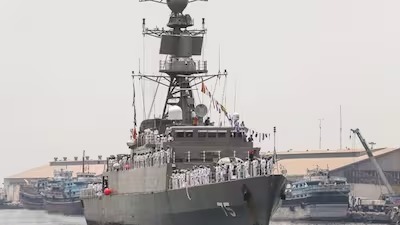
New Delhi: An Iranian naval frigate was sunk in the Indian Ocean earlier this week after being struck by a torpedo launched from a United States submarine, marking the first time since the World War II that an American submarine has destroyed an enemy vessel in combat.
The warship, identified as the IRIS Dena, went down on March 4 roughly 40 nautical miles south of Galle. The vessel had earlier participated in the multinational naval exercise MILAN 2026 naval exercise and an international fleet review in Visakhapatnam before beginning its return journey westward.
The strike was carried out by a Los Angeles-class submarine using a Mark 48 torpedo, a sophisticated underwater weapon designed to destroy heavily armed vessels. The torpedo detonates beneath a ship’s hull rather than striking above the waterline, creating a powerful gas bubble that rapidly expands and collapses. This process lifts and destabilises the vessel, often causing severe structural damage that can break the hull or disable critical systems.
The Mark 48 torpedo measures about 19 feet in length, weighs around 3,700 pounds and carries a 650 pound warhead. Equipped with advanced guidance systems, it can track targets using active or passive sonar and continue pursuing them even after an initial miss. The weapon is widely regarded as one of the most lethal anti ship torpedoes currently deployed.
The Iranian frigate reportedly issued a distress call shortly after a massive underwater explosion damaged its hull. The ship disappeared from radar soon after and sank within an hour, leaving an oil slick at the site. Rescue teams later recovered survivors and bodies from the water.
Authorities in Sri Lanka rescued 32 crew members, while dozens of sailors remain missing. Several bodies were transported to hospitals in the region as search operations continued.
Iran reacted strongly to the attack, condemning the strike and warning the United States that it would face consequences. The incident has intensified tensions in the region and highlights the growing risk of naval confrontations extending far beyond the Persian Gulf into the wider Indian Ocean.