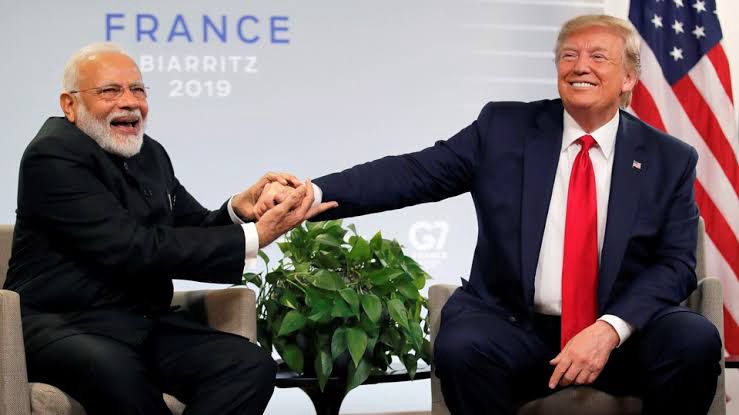
Washington, Feb 21: Tariffs on Indian imports into the United States have been reduced to 10 per cent under a temporary order issued by President Donald Trump, after his administration’s earlier tariff policy faced a setback in the US Supreme Court.
The revised tariff replaces higher duties that had been proposed earlier, including an 18 per cent rate under a planned trade arrangement. The new 10 per cent duty applies not only to India but also to several other trading partners and is expected to remain in place for up to 150 days while the administration develops a longer-term policy.
The move follows a Supreme Court ruling that struck down the earlier tariff measures, holding that the administration had exceeded its authority under emergency economic powers provisions. The decision effectively removed the legal basis for imposing country-specific tariffs under the earlier framework.
Soon after the ruling, Trump signed a fresh order invoking a different legal mechanism to impose a temporary global tariff. The step ensures that imports from multiple countries, including India, continue to face duties despite the court’s decision blocking the earlier tariff structure.
The temporary tariff is being seen as a stopgap measure intended to maintain trade restrictions while the administration considers alternative legal and policy options. Officials indicated that the administration remains committed to using tariffs as part of its broader trade strategy and is exploring ways to implement a more durable framework.
The court ruling had initially raised the possibility that tariffs on Indian goods could be reduced significantly or removed altogether. However, the new order maintains a baseline duty on imports, ensuring that Indian exports to the US market remain subject to tariffs during the interim period.
Despite the legal setback, the administration signalled that trade engagement with India would continue and that tariffs would remain an important component of ongoing negotiations. The revised tariff structure is expected to remain in force until a more permanent arrangement is finalised.
The development is being viewed as a significant challenge to Trump’s tariff policy, which has been a central element of his economic agenda and trade negotiations with several countries. At the same time, the temporary reduction to 10 per cent provides partial relief compared to the higher tariffs that had been proposed earlier.