Team Goemkarponn
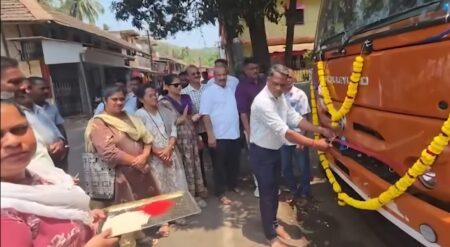
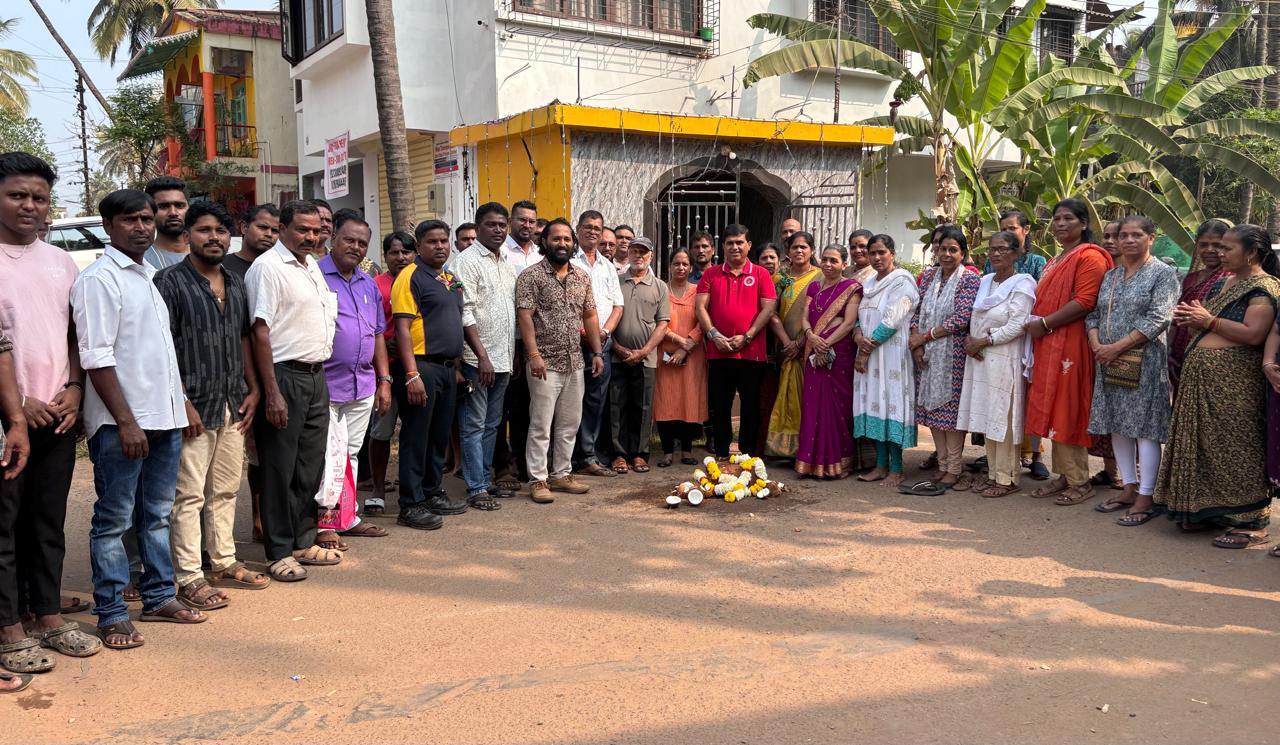
VASCO: Ending a public demand pending for nearly four decades, Vasco MLA Krishna Salkar on Friday launched the restoration work of the major nullah at Sasmolem, to be taken up in a phased manner at an estimated cost of ₹1 crore. The project is expected to bring long-term relief to residents of the area, which has faced drainage-related issues for several years.
The work was inaugurated in the presence of Mormugao Municipal Council chairperson Girish Borker and a large number of local residents, who welcomed the move and termed it a long-overdue intervention.
Speaking on the occasion, Salkar said the issue had remained unattended despite its seriousness. “This was a long-pending demand of the people, and I genuinely do not understand why such a major issue was ignored for the last 40 years. After being elected, I visited all wards, interacted with residents and understood the core problems of each area. The nullah at Sasmolem repeatedly came up during these interactions,” he said.
Salkar said he had assured residents that the dilapidated nullah would be restored. “Initially, this project was planned last year. However, residents demanded that the nullah be covered, which led to a substantial increase in the project cost. As a result, the work had to be re-tendered. Today, we are finally launching the project,” he added.
Describing the importance of the nullah, the MLA said it plays a crucial role in the drainage system of the region. “This is a major nullah, as all the water flowing from Baina passes through this area. Its restoration is critical to prevent flooding and improve overall drainage,” Salkar said.
He also acknowledged the support received from the state leadership. “We are thankful to WRD Minister Subhash Shirodkar and Chief Minister Dr Pramod Sawant for approving all our projects and extending the necessary support,” he said.
Salkar further outlined the roadmap for road development across Vasco, stating that road works would commence only after completion of essential underground infrastructure. “We have already received work orders for all roads, but we have consciously not started them yet. At present, we are focusing on underground cabling. This will be followed by shifting of high-tension lines underground and the laying of sewerage pipelines,” he said.
Explaining the rationale, he added, “Once these works are completed, we will take up road development and hot-mixing across Vasco. This approach will ensure that newly developed roads are not dug up again for cables or pipelines later. The process may take a few months, but it will provide a permanent and well-planned solution.”