Team Goemkarponn
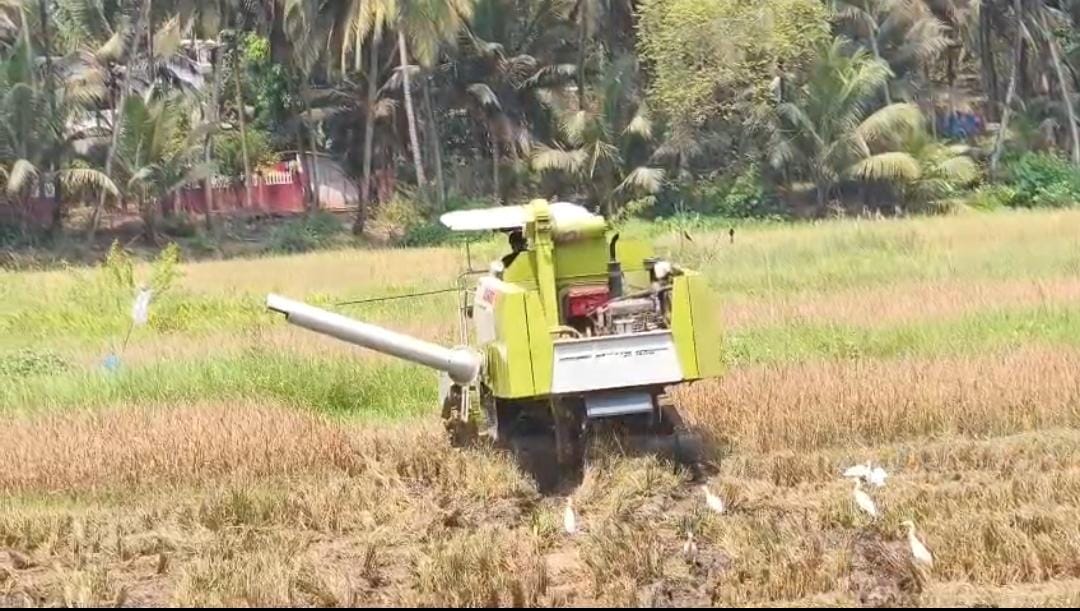
VELSAO: Traditional farmers from Velsao marked a significant milestone as they successfully harvested their first brinjal crop. The farmers, along with members of the Pale Tolem Xetkaranche Association (PTXA), expressed their gratitude to the Cortalim Farmers Club for providing them with free harvester machines to assist in their efforts.
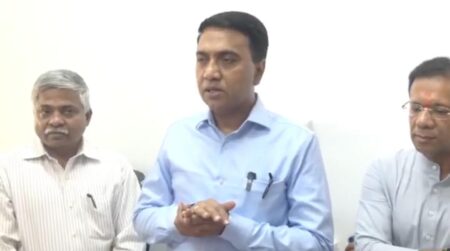
PTXA President Roquezinho D’Souza, speaking to the media, highlighted the importance of this achievement.
“This is a moment of great pride for our farmers. Months of dedication and hard work have finally paid off. We deeply appreciate the support of the Cortalim Farmers Club, which has consistently provided us with essential farming equipment such as tractors, tillers, and now harvesting machines,” he said.
He also noted that while the machines were available, there was a significant challenge in finding local operators. “One of the biggest issues we face is the lack of trained local operators for these machines. Often, we have to bring in operators from neighboring states, which causes delays and logistical challenges. If more Goans were trained in operating these machines, it would make a big difference for our farming community,” D’Souza added.
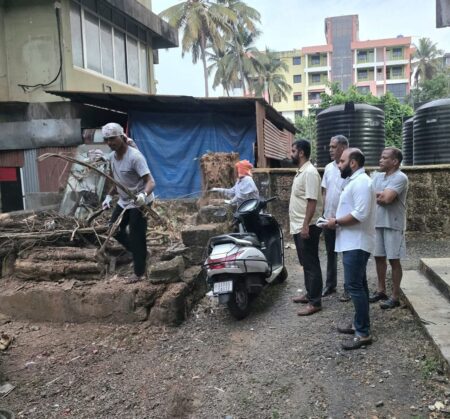
While celebrating the harvest, D’Souza also raised concerns about pollution affecting Velsao’s farmlands, which he attributed to large-scale construction projects and housing colonies in Zuarinagar. “In recent years, we’ve seen a drastic change in our fields. Previously, these lands remained dry and were easy to cultivate. Now, they are often waterlogged, making it difficult for us to farm,” he explained.
He revealed that inspections by the Agriculture Department had identified sewage overflow from nearby housing colonies as a major issue.
“The drainage system from these large projects is inadequate, causing sewage and wastewater to flow into our fields. The government must take this issue seriously by upgrading infrastructure and installing proper pipelines to prevent agricultural lands from being contaminated,” he stated.
D’Souza urged the government to prioritize sustainable development while promoting agriculture. “On one hand, we are being encouraged to take up farming, but on the other, our lands are being damaged by unchecked urbanization. There needs to be a balance so that agriculture can thrive alongside development,” he emphasized.
Encouraging young people to take up farming, he added, “Agriculture is not just a livelihood but a way of life. If given the right support and infrastructure, more youth will be encouraged to enter this field and contribute to Goa’s agricultural heritage.”