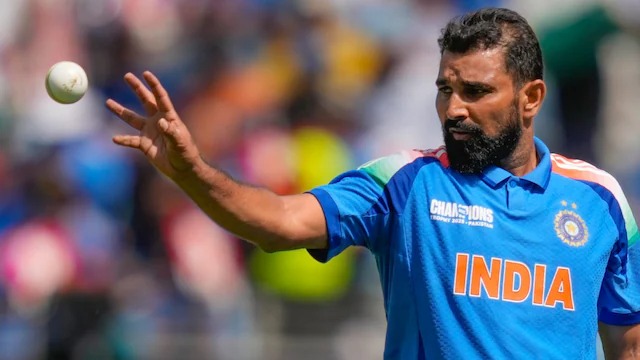
New Delhi: In a bid to restore balance to the game, Indian pacer Mohammed Shami has been advocating for the International Cricket Council (ICC) to reconsider its stance on using saliva to polish the ball. This move, initially banned during the COVID-19 pandemic, has been permanent since September 2022, significantly impacting the art of reverse swing. Shami’s appeal has now been bolstered by support from cricket legends Vernon Philander and Tim Southee, who believe that reinstating saliva use could give bowlers a much-needed edge in a game increasingly dominated by batsmen.
The absence of reverse swing has been particularly felt in One-Day Internationals (ODIs), where high-scoring matches have become the norm. Shami’s call follows India’s recent win over Australia in the Champions Trophy semi-final, where he lamented the lack of reverse swing. The use of saliva was once a crucial tool for bowlers to maintain the shine on one side of the ball, facilitating reverse swing. In contrast, sweat, the current alternative, is less reliable, especially in hot and humid conditions.
Philander and Southee have echoed Shami’s sentiments, emphasizing the need for bowlers to have some advantage in the game. Southee noted that the rule was initially introduced during the pandemic but now feels it’s time to revisit it, especially with the high-scoring trends in ODI cricket. Philander highlighted that reverse swing could have made a difference in recent matches, particularly on batting-friendly surfaces like those seen in Pakistan.
The debate underscores a broader issue in modern cricket: the balance between bat and ball. As the game evolves, ensuring that bowlers have tools to counter the dominance of batsmen is crucial for maintaining its competitive edge. With the support of prominent figures like Philander and Southee, Shami’s plea may spark a reevaluation of the ICC’s stance on saliva use, potentially leading to a more balanced and engaging game.
Sorry, there was a YouTube error.