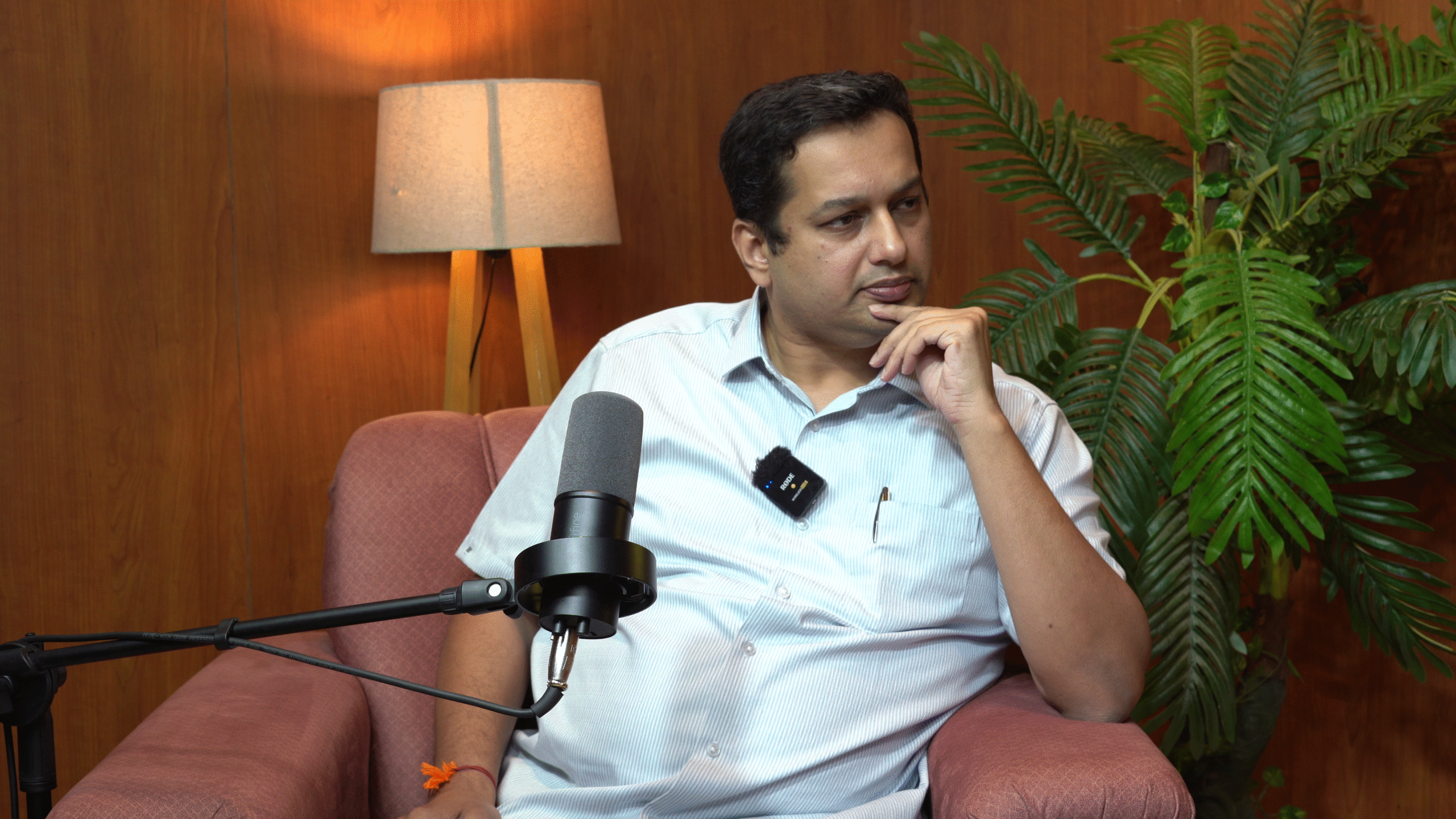
BJP leader Utpal Parrikar, a familiar yet independent political voice in Panaji, opened up
in an exclusive interview with Goemkarponn Editor Suraj Nandrekar about his strategies
for the upcoming Corporation of the City of Panaji (CCP) elections, the 2027 Goa
Assembly polls, and the persistent challenges facing Goa’s Smart City project. Speaking
candidly, Parrikar highlighted his vision of forming a capable, independent panel to
directly engage Panaji voters, cut through political theatrics, and prioritize execution
over rhetoric.
With Goa politics witnessing defections, leadership rivalries, and mounting public
disillusionment, Parrikar’s approach emphasizes achieving actionable results, promoting
urban development, and enhancing governance. The interview offers insights into his
rivalry with Babush Monserrate, potential collaborations with BJP, and his blueprint for
tackling civic issues that have long plagued Panaji’s municipal administration.
Q&A: Utpal Parrikar Speaks on Goa’s Political Challenges and CCP Vision
Q: You contested independently earlier and garnered public support. Are local and state
issues turning into mere power plays, or is there a real opportunity to make a difference?
A: Parrikar reflected that while power dynamics inevitably exist, the true opportunity lies
in assembling a dedicated team. “The focus has always been on identifying individuals
who can effectively manage subjects critical to Panaji—like infrastructure, urban
mobility, and civic services. We come together on different subjects’ roles,” he said.
Highlighting his independent run, Parrikar emphasized that public support was not about
personal ambition but about delivering tangible results. By presenting a team directly to
voters, he argued, residents can bypass rigid party structures and gain a panel focused
on execution and accountability.
Q: Can professionals or people with proven track records join your panel to engage
directly with voters? Isn’t that a better approach, especially in Goa’s current political
climate?
A: “Absolutely,” Parrikar affirmed. He stressed the importance of merit-based alliances
amid volatile political currents. “Our panel is prepared to present capable individuals
who can handle critical issues with precision. Going directly to the people is always
better, particularly now,” he added, noting voter frustration with entrenched leaders and
unfulfilled promises.
His approach positions Panaji voters to receive a panel capable of delivering results
without bureaucratic delays or partisan interference, presenting a credible alternative in
municipal politics.
Q: What is the fundamental point behind your independent panel initiative?
A: Parrikar was clear: it’s about providing residents with a reliable option amid
governance gaps. He elaborated that the panel would prioritize Smart City
execution—long stalled by delays in urban mobility, digital infrastructure, and housing
projects. By aligning with competent locals, Parrikar aims to focus on tangible
deliverables rather than media-driven narratives or partisan squabbles.
“The goal is to ensure accountability directly to voters,” he said. “It’s not about political
optics; it’s about creating a capable team that executes promises efficiently and
transparently.”
Q: Media coverage often amplifies issues and statements. How do you plan to deal with
public perception while addressing specific civic problems, like traffic and waste
management in Panaji?
A: Parrikar acknowledged the media’s influence but emphasized action over optics.
Citing local challenges—interpreted as “Citaram” or citizen-centric issues such as waste
management, traffic, and infrastructure bottlenecks—he highlighted a step-by-step
resolution strategy.
“This approach counters sensationalism by committing to verifiable progress,” Parrikar
explained. He contrasted his focus on execution with rival Babush Monserrate, whom he
described as more invested in political theater than in delivering results for residents.
Q: How does your approach differ from traditional cabinet-style announcements or
political promises?
A: Dismissing mere policy proclamations as insufficient, Parrikar advocated for hands-on
executioners. “Cabinet announcements are one thing, but delivering results requires
individuals who can implement solutions on the ground,” he said.
He indicated plans to strengthen ties with BJP at the state level while maintaining
independence in CCP elections, aiming to attract voters disillusioned with conventional
party politics. Looking ahead to 2027, Parrikar suggested that this model could expand
statewide, addressing delays in Smart City projects, stalled housing schemes, and digital
infrastructure setbacks.
Q: Goa politics has seen cash-for-jobs probes, leadership changes, and defections. How
does your panel fit into this turbulent environment?
A: Parrikar said the panel model is designed to rise above partisan chaos. “By creating a
team focused on execution, we provide voters with an alternative that is grounded in
competence rather than rhetoric. Goa’s political landscape needs more problem-solvers
and fewer political theatrics,” he explained.
He stressed that Panaji’s municipal voters deserve accountability and
performance-driven governance, with a panel capable of delivering real change instead
of relying solely on promises or media attention.
Q: What are the key areas your panel will prioritize if elected?
A: Parrikar outlined a multi-pronged focus:
● Smart City execution: Addressing delays in digital infrastructure, traffic
management, and urban mobility.
● Urban governance: Ensuring efficient waste management, water supply, and civic
services.
● Citizen engagement: Bringing solutions directly to the community, bypassing
bureaucratic hurdles.
● Merit-based alliances: Selecting professionals with proven track records, ensuring
competency across all sectors.
He emphasized that these priorities are not just theoretical but actionable commitments
designed to improve residents’ quality of life.
Q: How do you envision Panaji voters responding to this independent, merit-based
model?
A: Parrikar expressed optimism, noting widespread voter fatigue with traditional politics.
“People are looking for tangible results. They are frustrated with delays and partisanship.
Our panel offers a credible, results-driven alternative that directly addresses their
concerns,” he said.
By bypassing party rigidity and focusing on execution, Parrikar believes his model will
resonate with voters seeking transparency, accountability, and measurable progress in
municipal governance.
Q: Looking beyond Panaji, how do you see this approach influencing Goa’s broader
political landscape, especially the 2027 Assembly polls?
A: Parrikar hinted at a potential statewide expansion of his panel model. “If this works in
Panaji, it can be a blueprint for other constituencies. The focus is on delivering projects,
ensuring accountability, and empowering capable leaders to make decisions based on
results, not political expediency,” he explained.
He indicated that successful implementation in CCP elections could influence voter
expectations and reshape campaign strategies across Goa, highlighting the role of
independent, competency-driven alliances in transforming political engagement.
Q: How do you respond to critics who say forming an independent panel risks splitting
votes or diluting party influence?
A: Parrikar dismissed such criticism, arguing that the focus should remain on service
delivery rather than party politics. “This is not about splitting votes; it’s about giving
Panaji residents an effective, accountable alternative. Governance should not be hostage
to political games,” he said.
He emphasized that like-minded collaboration—whether with BJP or other allies—is not
about opportunism but about assembling capable teams to tackle civic challenges
head-on.
Q: What message do you want to convey to Panaji voters ahead of CCP elections?
A: Parrikar’s message was straightforward: voters deserve transparency, execution, and
accountability. “We are offering a capable panel, prepared to address critical issues,
engage with residents directly, and deliver on promises. This is a chance for Panaji to
have leaders who focus on results rather than rhetoric,” he said.
He concluded by reaffirming his commitment to merit-driven governance and
encouraging residents to look beyond party loyalties, emphasizing the transformative
potential of direct citizen engagement.
Utpal Parrikar’s candid insights signal a new strategic approach in Panaji’s municipal
politics. Amid Goa’s volatile political environment—marked by defections, scandals, and
public disillusionment—his focus on execution, citizen-centric planning, and merit-based
alliances offers voters an alternative to entrenched political rivalries. As the CCP
elections approach and the 2027 Assembly polls loom, Parrikar’s independent,
action-oriented model may well redefine voter expectations and reshape the future of
governance in Goa.
ce in Panaji, opened up in an exclusive interview with Goemkarponn Editor Suraj Nandrekar
about his strategies for the upcoming Corporation of the City of Panaji (CCP) elections, the
2027 Goa Assembly polls, and the persistent challenges facing Goa’s Smart City project.
Speaking candidly, Parrikar highlighted his vision of forming a capable, independent panel to
directly engage Panaji voters, cut through political theatrics, and prioritize execution over
rhetoric.
With Goa politics witnessing defections, leadership rivalries, and mounting public
disillusionment, Parrikar’s approach emphasizes achieving actionable results, promoting urban
development, and enhancing governance. The interview offers insights into his rivalry with
Babush Monserrate, potential collaborations with the BJP, and his blueprint for tackling civic
issues that have long plagued Panaji’s municipal administration.
Q&A: Utpal Parrikar Speaks on Goa’s Political Challenges and CCP Vision
Q: You contested independently earlier and garnered public support. Are local and state
issues turning into mere power plays, or is there a real opportunity to make a difference?
A: Parrikar reflected that while power dynamics inevitably exist, the true opportunity lies in
assembling a dedicated team. “The focus has always been on identifying individuals who can
effectively manage subjects critical to Panaji—like infrastructure, urban mobility, and civic
services. We come together on different subjects’ roles,” he said.
Highlighting his independent run, Parrikar emphasized that public support was not about
personal ambition but about delivering tangible results. By presenting a team directly to voters,
he argued, residents can bypass rigid party structures and gain a panel focused on execution
and accountability.
Q: Can professionals or people with proven track records join your panel to engage
directly with voters? Isn’t that a better approach, especially in Goa’s current political
climate?
A: “Absolutely,” Parrikar affirmed. He stressed the importance of merit-based alliances amid
volatile political currents. “Our panel is prepared to present capable individuals who can handle
critical issues with precision. Going directly to the people is always better, particularly now,” he
added, noting voter frustration with entrenched leaders and unfulfilled promises.
His approach positions Panaji voters to receive a panel capable of delivering results without
bureaucratic delays or partisan interference, presenting a credible alternative in municipal
politics.
Q: What is the fundamental point behind your independent panel initiative?
A: Parrikar was clear: it’s about providing residents with a reliable option amid governance
gaps. He elaborated that the panel would prioritize Smart City execution—long stalled by delays
in urban mobility, digital infrastructure, and housing projects. By aligning with competent locals,
Parrikar aims to focus on tangible deliverables rather than media-driven narratives or partisan
squabbles.
“The goal is to ensure accountability directly to voters,” he said. “It’s not about political optics; it’s
about creating a capable team that executes promises efficiently and transparently.”
Q: Media coverage often amplifies issues and statements. How do you plan to deal with
public perception while addressing specific civic problems, like traffic and waste
management in Panaji?
A: Parrikar acknowledged the media’s influence but emphasized action over optics. Citing local
challenges—interpreted as “Citaram” or citizen-centric issues such as waste management,
traffic, and infrastructure bottlenecks—he highlighted a step-by-step resolution strategy.
“This approach counters sensationalism by committing to verifiable progress,” Parrikar
explained. He contrasted his focus on execution with rival Babush Monserrate, whom he
described as more invested in political theater than in delivering results for residents.
Q: How does your approach differ from traditional cabinet-style announcements or
political promises?
A: Dismissing mere policy proclamations as insufficient, Parrikar advocated for hands-on
executioners. “Cabinet announcements are one thing, but delivering results requires individuals
who can implement solutions on the ground,” he said.
He indicated plans to strengthen ties with BJP at the state level while maintaining independence
in CCP elections, aiming to attract voters disillusioned with conventional party politics. Looking
ahead to 2027, Parrikar suggested that this model could expand statewide, addressing delays in
Smart City projects, stalled housing schemes, and digital infrastructure setbacks.
Q: Goa politics has seen cash-for-jobs probes, leadership changes, and defections. How
does your panel fit into this turbulent environment?
A: Parrikar said the panel model is designed to rise above partisan chaos. “By creating a team
focused on execution, we provide voters with an alternative that is grounded in competence
rather than rhetoric. Goa’s political landscape needs more problem-solvers and fewer political
theatrics,” he explained.
He stressed that Panaji’s municipal voters deserve accountability and performance-driven
governance, with a panel capable of delivering real change instead of relying solely on promises
or media attention.
Q: What are the key areas your panel will prioritize if elected?
A: Parrikar outlined a multi-pronged focus:
● Smart City execution: Addressing delays in digital infrastructure, traffic management,
and urban mobility.
● Urban governance: Ensuring efficient waste management, water supply, and civic
services.
● Citizen engagement: Bringing solutions directly to the community, bypassing
bureaucratic hurdles.
● Merit-based alliances: Selecting professionals with proven track records, ensuring
competency across all sectors.
He emphasized that these priorities are not just theoretical but actionable commitments
designed to improve residents’ quality of life.
Q: How do you envision Panaji voters responding to this independent, merit-based
model?
A: Parrikar expressed optimism, noting widespread voter fatigue with traditional politics. “People
are looking for tangible results. They are frustrated with delays and partisanship. Our panel
offers a credible, results-driven alternative that directly addresses their concerns,” he said.
By bypassing party rigidity and focusing on execution, Parrikar believes his model will resonate
with voters seeking transparency, accountability, and measurable progress in municipal
governance.
Q: Looking beyond Panaji, how do you see this approach influencing Goa’s broader
political landscape, especially the 2027 Assembly polls?
A: Parrikar hinted at a potential statewide expansion of his panel model. “If this works in Panaji,
it can be a blueprint for other constituencies. The focus is on delivering projects, ensuring
accountability, and empowering capable leaders to make decisions based on results, not
political expediency,” he explained.
He indicated that successful implementation in CCP elections could influence voter expectations
and reshape campaign strategies across Goa, highlighting the role of independent,
competency-driven alliances in transforming political engagement.
Q: How do you respond to critics who say forming an independent panel risks splitting
votes or diluting party influence?
A: Parrikar dismissed such criticism, arguing that the focus should remain on service delivery
rather than party politics. “This is not about splitting votes; it’s about giving Panaji residents an
effective, accountable alternative. Governance should not be hostage to political games,” he
said.
He emphasized that like-minded collaboration—whether with BJP or other allies—is not about
opportunism but about assembling capable teams to tackle civic challenges head-on.
Q: What message do you want to convey to Panaji voters ahead of CCP elections?
A: Parrikar’s message was straightforward: voters deserve transparency, execution, and
accountability. “We are offering a capable panel, prepared to address critical issues, engage
with residents directly, and deliver on promises. This is a chance for Panaji to have leaders who
focus on results rather than rhetoric,” he said.
He concluded by reaffirming his commitment to merit-driven governance and encouraging
residents to look beyond party loyalties, emphasizing the transformative potential of direct
citizen engagement.
Utpal Parrikar’s candid insights signal a new strategic approach in Panaji’s municipal politics.
Amid Goa’s volatile political environment—marked by defections, scandals, and public
disillusionment—his focus on execution, citizen-centric planning, and merit-based alliances
offers voters an alternative to entrenched political rivalries. As the CCP elections approach and
the 2027 Assembly polls loom, Parrikar’s independent, action-oriented model may well redefine
voter expectations and reshape the future of governance in Goa.
Sorry, there was a YouTube error.