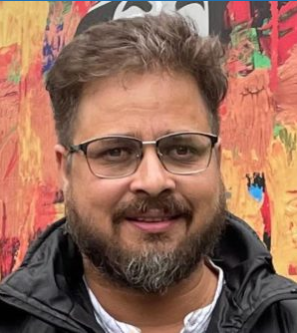
On Thursday-Friday intervening night, when most of the city had turned in, Chief Minister Pramod Sawant chose to do what many leaders hesitate to do during a tense standoff. He went to the protest site, listened, spoke directly to the people, and attempted to cool tempers before the situation spiralled out of control. In doing so, he demonstrated a quality that is increasingly rare in public life. The willingness to engage, not from behind barricades or through statements, but face-to-face.
The agitation by villagers of Chimbel against the proposed Unity Mall had already stretched for over 12 hours. Protesters had been sitting on the national highway since morning, raising concerns about environmental damage, wetlands, and the future of Toyyar Lake. Emotions were high, traffic was disrupted, and the risk of confrontation was real. At such moments, the absence of leadership can turn peaceful dissent into chaos. Sawant’s decision to reach the Merces junction close to midnight helped ensure that did not happen.
What stood out was not merely his presence but the manner of engagement. The Chief Minister did not dismiss the protesters or reduce the issue to law and order. Instead, he acknowledged the complexity of the project and the limits of the state government’s authority, while still offering space for review and dialogue. By explaining that the Unity Mall is a Government of India initiative and cannot be scrapped unilaterally, he placed facts on the table without inflaming sentiments.
More importantly, he backed words with a concrete concession. The decision to expand the notified wetland area of Toyyar Lake from 1.79 lakh to 2.63 lakh square metres, in line with an earlier NIO recommendation, directly addressed one of the villagers’ core demands. This was not an abstract assurance. It was a measurable commitment that signalled the government’s recognition of ecological concerns and the legitimacy of local voices.
Equally significant was Sawant’s assurance that the state would not appeal the District Court’s recent order related to the project, at least for now. While legal consultations are still ongoing, the signal was clear. The government is willing to pause, reflect, and avoid aggressive legal posturing that could further alienate citizens. In a climate where governments often rush to challenge unfavourable court orders, restraint itself becomes a statement.
Critics may argue that the Chief Minister stopped short of announcing the scrapping of the Unity Mall project. That criticism is not without merit. Many protesters left unconvinced, and the continuation of a hunger strike reflects lingering distrust. But leadership is not about making dramatic declarations under pressure. It is about steering complex issues through due process, especially when multiple stakeholders, including the Centre, are involved.
What Sawant achieved that night was de-escalation. He prevented a prolonged highway blockade from escalating into violence. He created space for further talks. He acknowledged environmental anxieties without branding protesters as anti-development. These are not small achievements in today’s polarised political environment, where dissent is too often met with indifference or force.
The peaceful dispersal of protesters around midnight was itself proof that dialogue works. Despite long hours, police deployment, and logistical strain, the agitation remained non-violent. That outcome owes as much to the restraint of the villagers as to the Chief Minister’s intervention. It showed that when people feel heard, even partially, tempers cool and reason prevails.
This episode also carries a larger lesson for governance in Goa. Development projects, especially those involving land and ecology, cannot be pushed through without trust. Trust is built through transparency, consultation, and the willingness to reconsider decisions. Sawant’s late-night visit did not resolve the Unity Mall controversy, but it set the tone for how such conflicts should be handled.
Good leadership is not measured only by announcements made from podiums. Sometimes, it is measured by showing up at the right moment, listening patiently, and choosing dialogue over confrontation. On Wednesday night, Goa’s Chief Minister did exactly that. For a state that prides itself on its democratic ethos, that approach deserves recognition.