New Delhi: The debate over potential transit fees in the Strait of Hormuz has intensified amid rising tensions in West Asia, with legal experts pointing to international law that clearly differentiates between canals and natural waterways.
Under the United Nations Convention on the Law of the Sea, countries bordering strategic straits cannot impose charges simply for allowing ships to pass through. These waterways are considered international passages where vessels enjoy the right of transit without obstruction or mandatory fees. Limited charges are permitted only for specific services such as navigation assistance or port related support, and must be applied fairly.
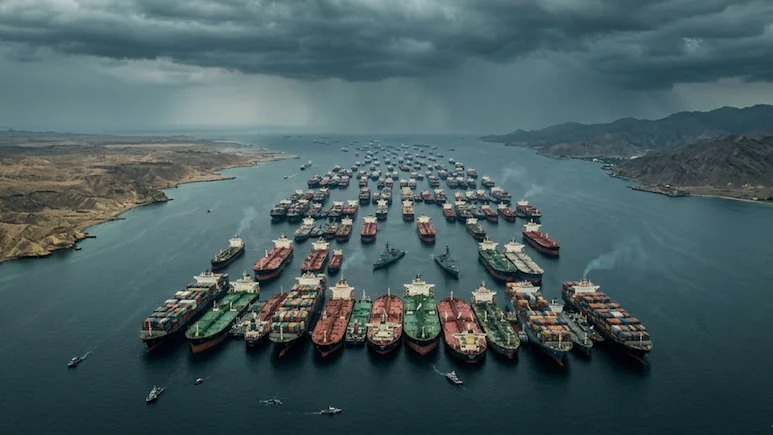
This principle is why any move by Iran to levy tolls on ships passing through the Strait of Hormuz is widely viewed as inconsistent with established maritime norms. The narrow but crucial route connects the Persian Gulf to the open ocean and handles a significant share of global oil and gas shipments, making uninterrupted access essential for global trade.
In contrast, canals such as the Suez Canal and the Panama Canal operate under a different legal framework. As artificial waterways constructed and maintained by states, they are allowed to charge transit fees to recover operational and infrastructure costs. These charges are internationally recognised and form a standard part of global shipping.
The distinction lies in the nature of the route. Natural straits are shared global corridors governed by the principle of free passage, while canals are sovereign infrastructure projects where usage fees are permitted.
The issue has gained urgency as tensions in the region disrupt shipping flows and raise concerns among energy dependent nations. Any attempt to impose unilateral tolls in the Strait of Hormuz could have far reaching consequences for global trade, particularly for countries heavily reliant on oil imports passing through the route.
As diplomatic efforts continue, the question of free navigation versus control remains central to resolving the crisis.