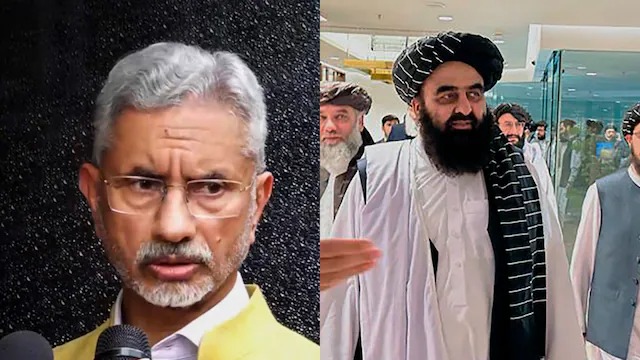
New Delhi: In a landmark development, Indian External Affairs Minister S. Jaishankar held his first direct conversation with Afghanistan’s Acting Foreign Minister Amir Khan Muttaqi since the Taliban took control of Kabul. The call, which carries significant strategic weight, is being viewed as a strong message to Pakistan: India will not allow any third party to undermine its relations with Afghanistan.
According to top government sources, the dialogue was part of a broader effort by New Delhi to ensure regional stability and counter Islamabad’s influence in the region. The conversation focused on reaffirming mutual commitment to bilateral cooperation and addressing India’s core security concerns, particularly the potential misuse of Afghan territory by Pakistan-backed terror groups.
India Seeks Security Assurances From Taliban
During the talks, India reportedly sought assurances that Afghan soil would not be used to launch attacks against Indian interests. This is especially critical given Afghanistan’s continued status as a base for extremist outfits such as ISIS-K, Tehrik-e-Taliban Pakistan (TTP), Al-Qaeda, and Pakistan-based groups like Lashkar-e-Taiba (LeT) and Jaish-e-Mohammed (JeM). Sources say the Taliban gave verbal commitments to prevent their territory from being used for Pakistan-sponsored terrorism.
India also expressed concerns over Afghanistan’s growing proximity to China, as key mining contracts have reportedly been awarded to Chinese companies via Pakistani channels. These developments, according to officials, are viewed with caution in New Delhi.
Operation Sindoor and Pakistan’s Allegations
The discussions come amid rising tensions in the aftermath of India’s Operation Sindoor—its military operation targeting terror infrastructure in Pakistan and Pakistan-occupied Kashmir (PoK). Following the operation, Pakistan claimed that an Indian missile had struck Afghan territory. These allegations were swiftly denied by both New Delhi and Kabul.
Afghan Defence Ministry spokesperson Enaitullah Khawarzmi labelled Pakistan’s assertions as “baseless” and reaffirmed that “Afghanistan is safe and secure” with “no such incident” taking place. India also dismissed the claims as “completely ludicrous.”
Disinformation and Attempts to Destabilize Ties
Sources suggest that Pakistan may be attempting to plant false narratives to damage the improving relationship between India and Afghanistan. There are concerns that Pakistan might fabricate claims suggesting Afghan Taliban fighters have reached Kashmir, or that Afghan-origin weapons are being used in the region.
According to Indian intelligence inputs, Pakistan is believed to be manufacturing such weapons domestically and could attempt to attribute them to Afghanistan in an effort to sabotage bilateral trust. The Taliban, however, has rejected such propaganda and has demanded evidence if such weapons are indeed found in Kashmir.
Development Cooperation and Humanitarian Dialogue
Beyond the security concerns, the Jaishankar-Muttaqi conversation also covered humanitarian assistance and development cooperation. India has historically invested in several infrastructure and social projects in Afghanistan, and both sides expressed interest in continuing such collaboration, even under the new regime.
In summary, this first high-level contact between India and the Taliban-led Afghan government marks a significant diplomatic shift, underscoring New Delhi’s intent to re-engage with Kabul directly—while making it clear that it will not tolerate interference or misinformation from Pakistan aimed at derailing Indo-Afghan ties.
Sorry, there was a YouTube error.