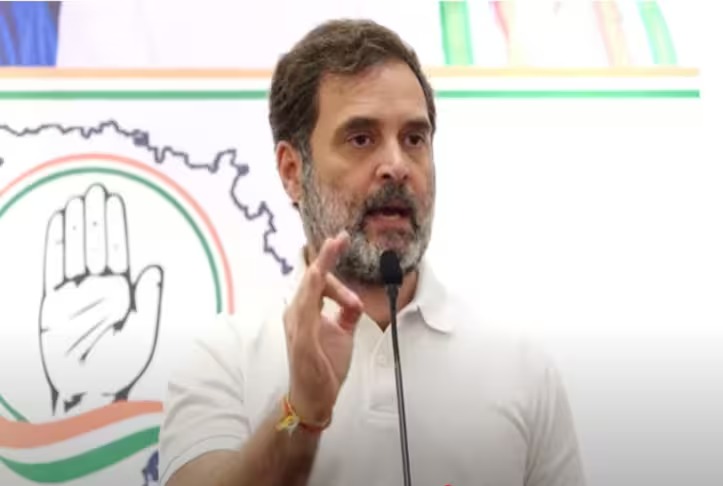
New Delhi: In a move that has reignited the contentious debate over caste and merit in India, Rahul Gandhi, the Leader of Opposition in the Lok Sabha, has sparked controversy by labeling the country’s merit system as “unfair” and advocating for a caste census to expose inequality. This stance has drawn sharp criticism from the Bharatiya Janata Party (BJP), which accuses Gandhi of undermining merit and reflecting a dynastic mindset. The ongoing discussions highlight the deep-seated issues within India’s education and governance systems, where caste continues to play a significant role.
Rahul Gandhi’s remarks have been at the center of the debate, as he described India’s merit system as deeply flawed and dominated by an “upper-caste narrative.” He argued that this system unfairly affects Dalits, Other Backward Classes (OBCs), and tribals, emphasizing that the education and bureaucratic entry systems are culturally disconnected from these communities. Gandhi stressed the need for a caste census to reveal the truth about inequality in India, suggesting that those opposing it are trying to hide the truth.
Gandhi’s comments were made during a conversation with Professor Sukhdeo Thorat, where they discussed the historical struggle of Dalits for access to governance, education, bureaucracy, and resources. He referenced Dr. B.R. Ambedkar’s Mahad Satyagraha, a pivotal moment in the fight against caste discrimination, highlighting that the struggle for equality and respect continues to this day.
The BJP has responded strongly to Gandhi’s stance, criticizing his views as an attempt to undermine the achievements of meritorious individuals from Scheduled Castes (SC), Scheduled Tribes (ST), and OBC communities. BJP leaders have suggested that Gandhi’s focus on caste reflects a loss of political relevance for the Congress party, particularly after its recent electoral losses.
Sorry, there was a YouTube error.