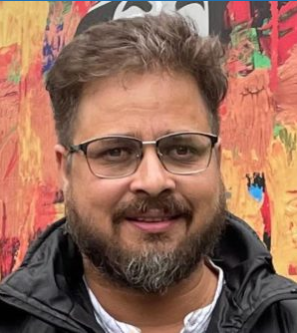
“The Delhi factor cannot be overstated. For a small state like Goa, political capital in the national capital translates into leverage. It means quicker clearances, stronger representation and greater confidence from the Centre in backing state leadership. A chief minister who wins local body elections convincingly earns credibility as a mass leader rather than a caretaker. Sawant has crossed that threshold.
Critics may argue that opposition disunity played a role, and that is true. But elections are not won by chance. Political leadership is measured by the ability to exploit openings and convert weakness of rivals into an advantage. The BJP did exactly that. Sawant’s leadership ensured that the party remained focused while the opposition remained scattered.”
The verdict of the 2025 Zilla Panchayat elections has quietly but decisively reshaped Goa’s political landscape. While much attention has been placed on opposition failures, the larger story is one of consolidation. Chief Minister Dr Pramod Sawant has emerged from these elections stronger, more secure in his leadership, and significantly more relevant within the BJP’s national power structure.
Zilla Panchayat elections are often dismissed as local contests, but in Goa, they serve as a critical barometer of rural sentiment. They test a government’s organisational strength, its grassroots connections and its ability to translate governance into votes. On all these counts, the BJP under Sawant has passed convincingly. Winning a clear majority of ZP seats across North and South Goa is no small feat in a state known for volatile politics and fragmented mandates.
For Sawant, this result is not merely about numbers. It is about authority. Since taking over as Chief Minister, he has faced scepticism from rivals and, at times, from within his own party. Questions were raised about his political heft, his ability to manage allies, and his command over the organisation. The ZP results have answered those doubts far more effectively than any speech or reshuffle could.
Rural Goa has endorsed continuity. This endorsement matters because village-level governance is where policies meet people. Roads, water supply, sanitation, welfare delivery and local employment shape voter perception more than headline politics. That the BJP managed to retain dominance at this level suggests that Sawant’s administration has not lost touch with the ground. It also indicates that welfare schemes and development projects have found resonance beyond urban centres.
Equally important is what this result signals to New Delhi. In today’s BJP, chief ministers are judged not just on governance but on their ability to deliver elections and keep the organisation disciplined. Sawant has demonstrated both. The campaign was tightly managed, alliances were held together, and internal dissent was kept under control. This sends a clear message to the central leadership that Goa is in steady hands.
The Delhi factor cannot be overstated. For a small state like Goa, political capital in the national capital translates into leverage. It means quicker clearances, stronger representation and greater confidence from the Centre in backing state leadership. A chief minister who wins local body elections convincingly earns credibility as a mass leader rather than a caretaker. Sawant has crossed that threshold.
Critics may argue that opposition disunity played a role, and that is true. But elections are not won by chance. Political leadership is measured by the ability to exploit openings and convert weakness of rivals into an advantage. The BJP did exactly that. Sawant’s leadership ensured that the party remained focused while the opposition remained scattered.
There is also a psychological dimension to this victory. Zilla Panchayat wins to energise the cadre. They create a pipeline of local leaders, strengthen booth level machinery and generate momentum ahead of larger elections. With Assembly polls on the horizon in the coming years, this result provides Sawant a solid foundation to build upon.
However, consolidation brings responsibility. A stronger mandate raises expectations. Rural voters who backed the BJP will expect faster development, better services and responsive governance. For Sawant, the challenge now is to convert political capital into tangible outcomes. Stability must translate into delivery.
Still, politically speaking, the message from the ZP elections is unmistakable. Dr Pramod Sawant is no longer just managing Goa. He is shaping its political direction. In doing so, he has not only strengthened his position within the state but has also enhanced his standing in Delhi as a leader who delivers results.
In a state where leaders often rise and fall quickly, this consolidation is significant. For now, Sawant stands firmly in control, with Goa and the national leadership watching his next move closely.