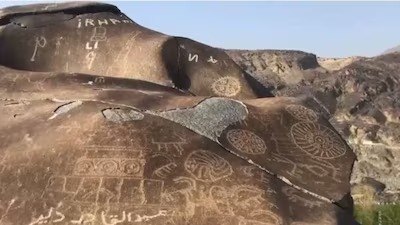
New Delhi: Ancient Hindu and Buddhist heritage sites spread across Pakistan are facing mounting threats from vandalism, neglect and unlawful occupation, raising serious concerns about the survival of some of South Asia’s oldest cultural landmarks. Several of these sites date back nearly 5,000 years and are considered vital to the shared civilisational history of the region.
Areas identified as particularly vulnerable include Pakistan occupied Kashmir, Gilgit Baltistan, Chilas, Hunza, Shatial, parts of Khyber Pakhtunkhwa and Balochistan. These regions host ancient temples, inscriptions and rock carvings that reflect centuries of Hindu and Buddhist presence. Scholars estimate that the Chilas Hunza Shatial belt alone contains more than 25,000 petroglyphs and inscriptions, with origins ranging from 5000 BCE to the 16th century CE.
Assessments indicate that several of these sites have been deliberately defaced. Hindu and Buddhist figures carved into rock surfaces are reported to have been scratched out or covered with permanent paint. In some locations, official markings and notices have allegedly been painted directly over ancient carvings, an act experts describe as irreversible damage to irreplaceable heritage.
Security concerns have also been highlighted in areas such as Chilas, where the presence of hardline groups has raised alarms about the safety of nearby archaeological and religious sites. Alongside vandalism, activists claim that a number of historic temples and monuments are under illegal occupation, with little visible effort to reclaim or safeguard them.
Cultural heritage specialists argue that the current situation reflects a broader failure to protect minority and indigenous heritage. They warn that weak enforcement of preservation laws and poor site management are accelerating the deterioration of monuments that have survived for millennia.
Experts further note that inadequate protection undermines international obligations to conserve cultural heritage. Without immediate intervention, they caution that many of these sites could suffer permanent loss, erasing tangible links to ancient belief systems, trade routes and artistic traditions.
There is growing demand for stronger legal safeguards, improved ground level security and independent oversight to prevent further destruction. Heritage advocates stress that timely action is essential to preserve these monuments for future generations and to protect a shared historical legacy that transcends modern borders.
Sorry, there was a YouTube error.