Team Goemkarponn
CANACONA: The Forest Department’s reported identification of 24 beaches across Goa, including eight in Canacona taluka, for proposed notification as Turtle Nesting Areas has triggered widespread concern among tourism stakeholders, residents and local representatives, who fear that the move could severely affect tourism activities and livelihoods along the coastal belt.
Of the 24 beaches reportedly identified across the State, 14 are in South Goa. Canacona alone accounts for eight beaches, raising concerns that a substantial portion of its coastline could come under additional regulatory restrictions.
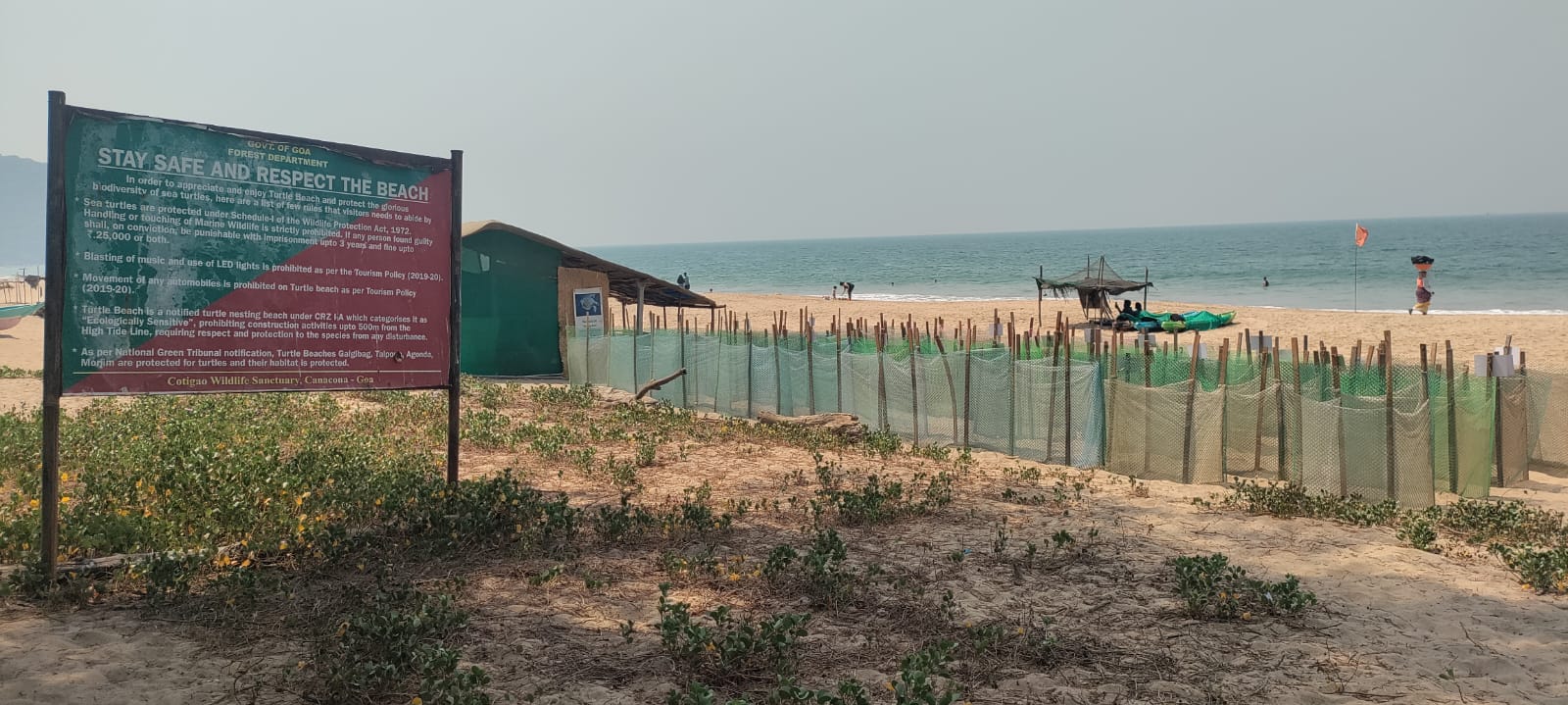
The eight beaches reportedly proposed for inclusion are Rajbag, Cabo-de-Rama, Cola, Patnem, Palolem, Tapona, Agonda and Galgibaga. The proposal is understood to have been communicated by the Forest Department to the Environment Department for consideration under the CRZ Notification, 2019.
President of the All Goa Private Property Shacks and Huts Owners Association, Dharmesh Saglani, strongly opposed the proposal, stating that Canacona already has two recognised turtle nesting beaches, Galgibaga and Agonda.
He warned that extending the designation to several more beaches could adversely affect tourism businesses and the livelihoods of thousands of people dependent on the sector. He urged the government to consult local communities and tourism stakeholders before taking any decision that could affect their economic interests.
Saglani also expressed concern that restrictions on beach shacks, private shacks and other tourism-related activities could significantly reduce tourism opportunities and business operations along the coast.
Palolem Beach, with a coastline of approximately 1.5 kilometres and extensive tourism-related activities, has also recently received international recognition, reportedly being voted Asia’s top beach and sixth-best beach in the world.
Goenkar NGO President Jack Fernandes said that nearly 70 per cent of livelihoods in Canacona depend on tourism and warned that declaring almost the entire coastal stretch as turtle nesting areas could trigger a serious economic crisis.
While emphasising the importance of environmental protection, Fernandes called for a balanced approach that safeguards marine and coastal ecosystems without undermining the rights and livelihoods of local communities.
He pointed out that Galgibaga and Agonda are already recognised turtle nesting beaches and urged the government to reconsider the wider proposal before finalising any notification.
A tourism stakeholder from Palolem expressed concern that restrictions on lighting, beach shacks, beach events and vehicle movement, particularly during the turtle nesting season, could create serious operational difficulties for tourism businesses. The nesting season, the stakeholder noted, coincides with a crucial period for tourism activity.
Meanwhile, Khola Village Panchayat Sarpanch Pandhari Prabhudesai said that Khola has only recently begun witnessing rapid growth in tourism-related activities, providing much-needed livelihood opportunities to unemployed local youth.
He expressed strong opposition to the reported identification of Rajbag, Cabo-de-Rama and Cola beaches, stating that such a move could severely restrict the village’s emerging tourism economy.
Prabhudesai said the village would not accept measures that could jeopardise the livelihood opportunities created through tourism. He indicated that the Panchayat would consider passing a resolution opposing the proposal at its forthcoming meeting, followed by another resolution at the next Gram Sabha.
With concerns mounting across Canacona, residents and tourism stakeholders are urging the government to reconsider the proposal, consult affected communities and adopt an approach that ensures the protection of turtle nesting habitats while safeguarding local livelihoods.