Team Goemkarponn
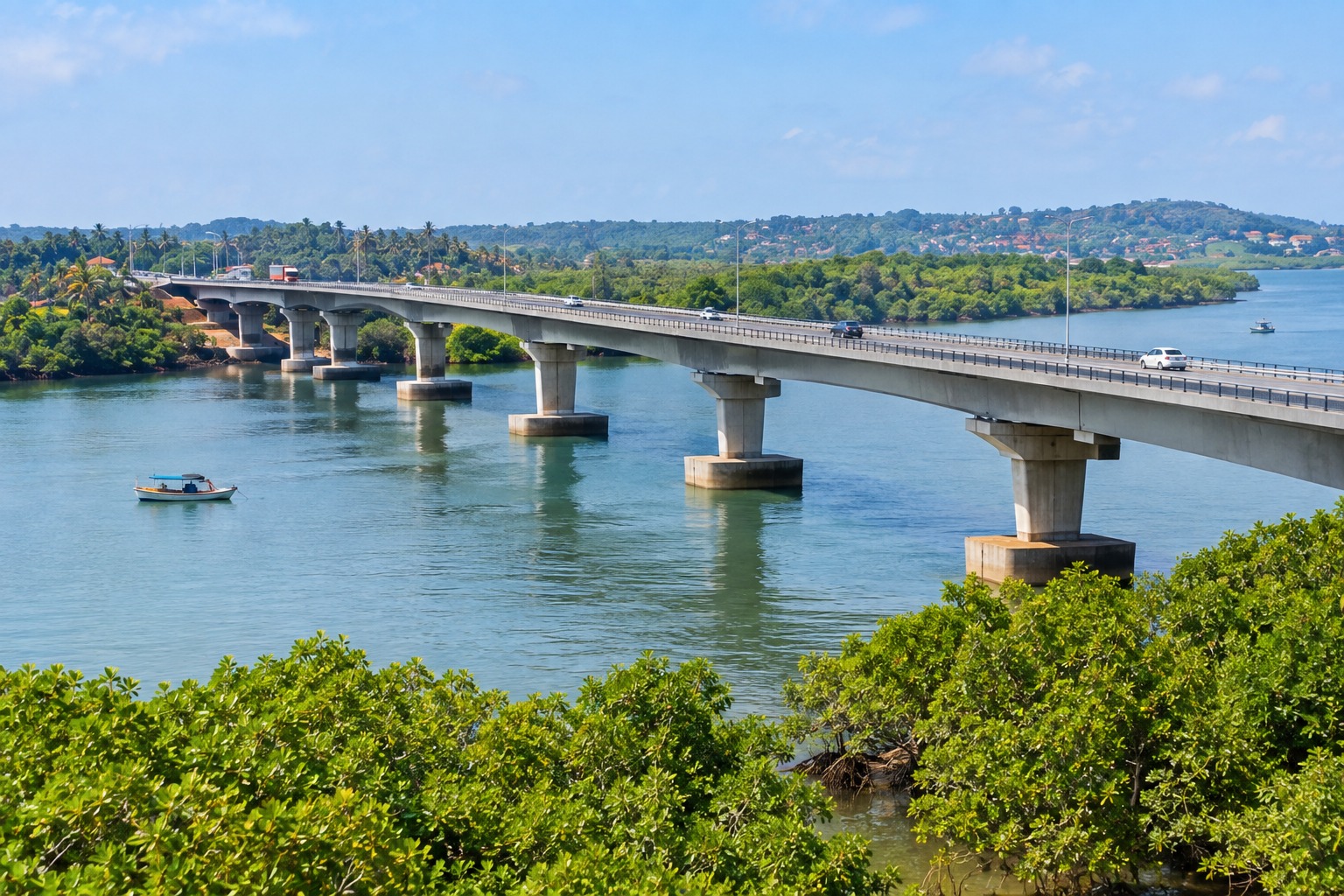
PANAJI: The proposed Rs 360-crore road bridge linking Chorao with the mainland has moved closer to implementation after the Expert Appraisal Committee (EAC) under the Union Ministry of Environment, Forest and Climate Change recommended granting the project CRZ clearance.
The environmental panel has, however, sought greater care in the execution of the project because of the mangrove and riverine ecosystems along the proposed alignment.
The 1.62-km bridge and its approach roads are expected to affect around 621 mangrove trees. Of these, 449 are located on the Salvador-do-Mundo side and 172 on the Chorao side.
The bridge design originally provided for 20 pillars, including foundations extending as deep as 35 metres. Several of the proposed structures fall within riverine and mangrove-rich stretches classified as CRZ-III No Development Zone.
Following the EAC’s concerns, the Goa State Infrastructure Development Corporation (GSIDC) modified the design on the Salvador-do-Mundo side. The number of piers there has been brought down from 12 to nine, with changes to their positioning. GSIDC estimates that the modification could prevent the removal of approximately 100 mangrove trees.
A separate mangrove restoration programme has also been proposed. Under the Mangrove Management Plan, GSIDC plans to undertake planting at a 1:5 replacement ratio, translating into around 3,105 mangrove trees at suitable riverine locations.
The EAC has asked for the restoration effort to be closely monitored, with an independent agency or reputed institution required to assess the survival rate and ecological performance of the plantations every year. The findings will form part of the compliance reports submitted to the concerned regional office.
The project’s Environmental Management Plan has set aside Rs 1 crore for environmental management and mitigation measures.
The committee has also instructed GSIDC to ensure that construction activity does not compromise water quality or damage adjoining mangrove habitats. Particular emphasis has been placed on maintaining the existing water-flow and hydrological pattern of the Mapusa River and nearby intertidal zones.