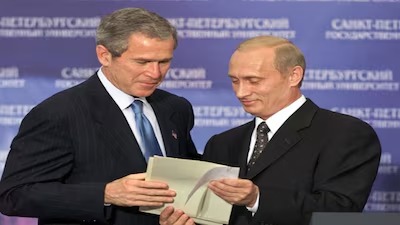
Washington: Newly released transcripts of private discussions between Russian President Vladimir Putin and then-U.S. President George W. Bush have exposed candid anxieties shared by the two leaders more than two decades ago about the security and proliferation risks posed by Pakistan’s nuclear weapons.
The declassified records, covering meetings and telephone calls from 2001 to 2008, were made public this week by the National Security Archive following a Freedom of Information request. They reveal that both leaders viewed Pakistan’s nuclear arsenal under then-military ruler Pervez Musharraf as a serious concern for international stability and non-proliferation.
In an early encounter during a June 2001 meeting in Slovenia, Mr Putin described Pakistan bluntly as “just a junta with nuclear weapons” and questioned why the West did not subject the country to sustained criticism despite its lack of democratic governance and opaque control over its atomic assets. The Russian president’s remarks underscored Moscow’s scepticism about Western tolerance for Islamabad’s nuclear status and its broader implications.
The documents show that both presidents repeatedly returned to worries about the possibility of nuclear or sensitive materials being transferred to other states. In discussions about alleged uranium of Pakistani origin found in Iran’s centrifuges, Mr Putin highlighted lingering cooperation between Pakistani elements and foreign nuclear programmes. President Bush acknowledged similar apprehensions, noting that such findings were a violation of international expectations and made Washington uneasy.
Transcripts also record Mr Bush telling Mr Putin that he had raised these concerns directly with Mr Musharraf, urging transparency about suspected transfers to countries such as Iran and North Korea. Both leaders lamented the difficulty in getting complete disclosures from Pakistani authorities, even after the exposure of the AQ Khan proliferation network and steps taken against some of its key figures.
Beyond proliferation worries, the exchanges reflect shared unease about Pakistan’s political stability and the robustness of controls over its nuclear command and materials. The candid nature of the conversations, seldom made public until now, offers a rare glimpse into how two of the world’s most powerful leaders privately assessed one of South Asia’s most enduring strategic challenges.