Team Goemkarponn
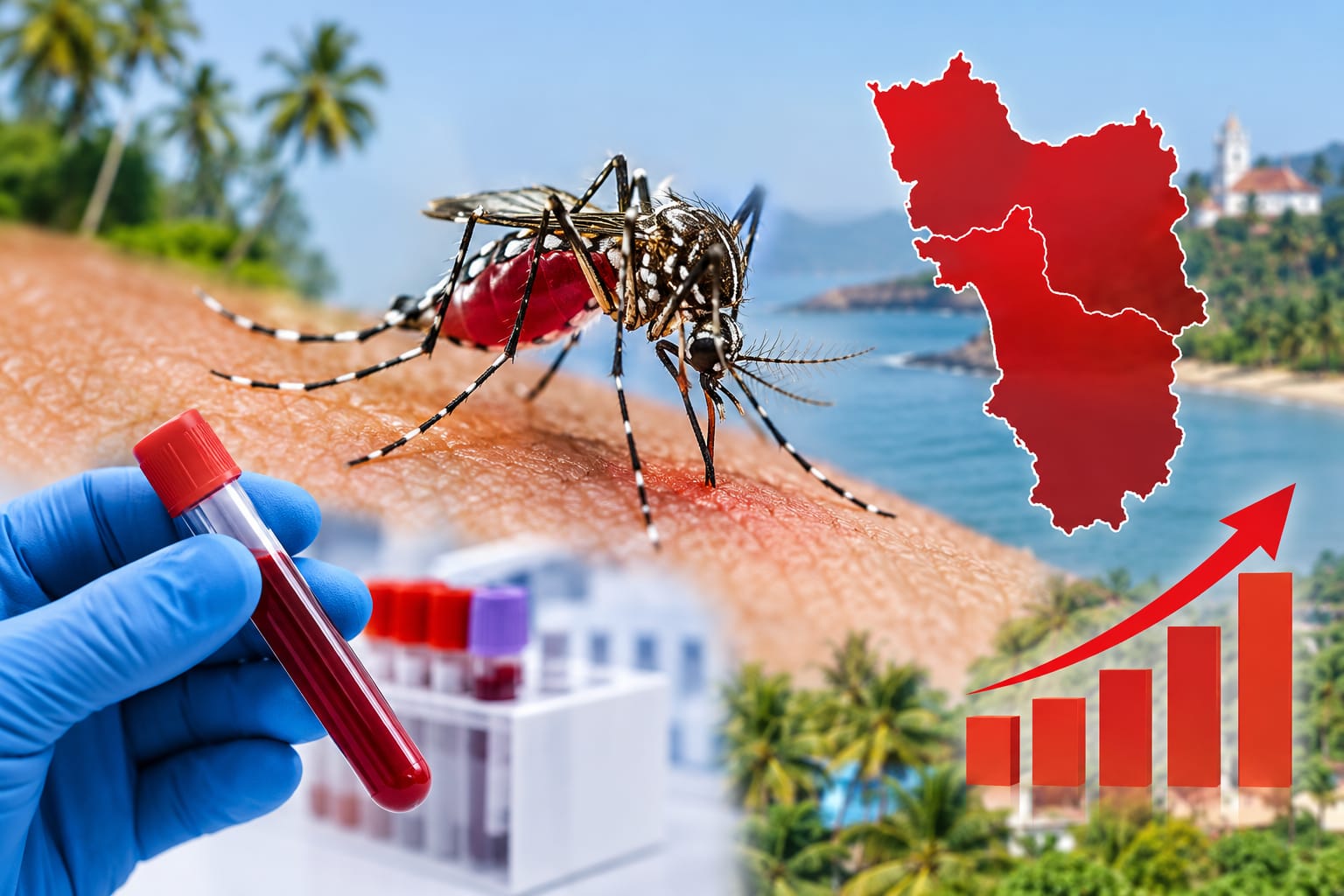
PANAJI: Goa has witnessed a sharp surge in dengue infections, with the State recording 136 confirmed cases up to September this year, more than double the 64 cases reported during the corresponding period last year. The spike has been particularly pronounced in August and September, according to surveillance data.
The State recorded 46 confirmed cases in August and 66 in September, compared to just four cases each during the same two months in 2025. As a result, 112 confirmed cases were reported in the two-month period this year, against only eight during the corresponding period last year.
The rise follows a relatively lower incidence during the first seven months of 2026. Between January and July, Goa recorded 24 confirmed dengue cases, compared to 56 during the same period in 2025. The trend changed sharply from August onwards.
South Goa has emerged as the major hotspot. Of the 66 confirmed cases recorded across the State in September, 63 were from South Goa, while North Goa reported three cases.
Surveillance data also showed 532 suspected cases testing positive for NS1, an antigen marker used for the early detection of dengue. Of these, 428 were reported from South Goa and 104 from North Goa.
Health authorities have cautioned that NS1-positive cases represent suspected or early detections and should not be equated with laboratory-confirmed cases. However, the high number of such detections points to a wider pool of suspected infections.
South Goa accounted for nearly 81 per cent of the NS1-positive cases and around 95 per cent of the confirmed dengue cases recorded in September.
The month-wise figures show the sudden escalation: Goa recorded five cases in January, one in February, four in March, one in April, five in May, one in June and seven in July, before cases jumped to 46 in August and 66 in September.
The Health Department has been maintaining surveillance and stressing measures to reduce mosquito breeding sites. Goa’s National Vector Borne Disease Control Programme notes that favourable conditions for Aedes mosquitoes can contribute to an increase in dengue transmission and emphasises community participation in eliminating breeding sources.