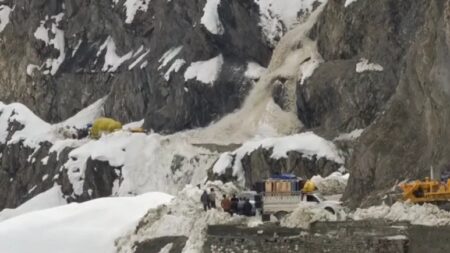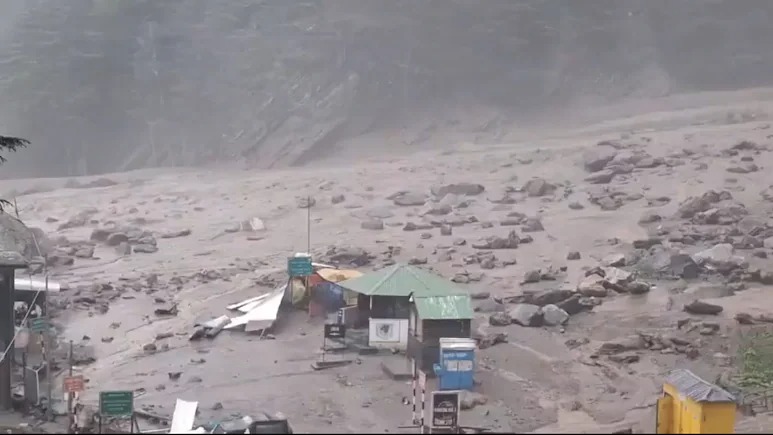
New Delhi: A powerful cloudburst and mudslide struck Uttarkashi’s Dharali village on Tuesday, killing at least four people and leaving many others missing. The disaster occurred around 1:45 p.m., sweeping away homes, hotels, and roads in minutes. Dharali, a key stop on the route to Gangotri, was left buried under debris as the Kheer Ganga river overflowed following the sudden cloudburst. Disturbing visuals show panicked locals fleeing as floodwaters engulfed the area.
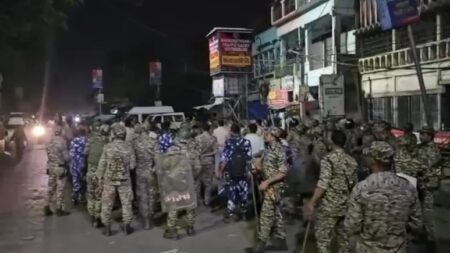
The Indian Army, stationed just 4 km away in Harshil, was the first to respond. Within 10 minutes, 150 personnel were deployed to the site, rescuing at least 20 people. Tragically, another cloudburst near the Harshil camp left nine soldiers missing. Despite the adversity, rescue efforts by the Army, SDRF, NDRF, and local administration are ongoing, though bad weather has stalled helicopter deployment.
Prime Minister Narendra Modi expressed condolences and assured all possible support to the state. Uttarakhand Chief Minister Pushkar Dhami called the incident “extremely distressing” and said operations are being carried out on a war footing. Locals described heart-wrenching scenes of people being swept away and buildings collapsing, with eyewitnesses recalling desperate attempts to warn those in harm’s way.
Experts have raised serious concerns about the lack of an early warning system in the Himalayan region. Former MoES Secretary Dr. M. Rajeevan stressed the urgent need for AI-based forecasting, high-resolution weather models, and real-time alert systems. Water expert Himanshu Thakkar blamed poor governance and unregulated construction for worsening the disaster’s impact, pointing to unchecked hotels and infrastructure near rivers.
While climate change is believed to intensify such events, experts warn against using it as an excuse for systemic failure. They stressed that disaster preparedness, strong environmental regulations, and independent post-disaster assessments are crucial. Unless urgent reforms are implemented, tragedies like the Uttarkashi floods may become more frequent in India’s vulnerable Himalayan regions.
Sorry, there was a YouTube error.