Team Goemkarponn
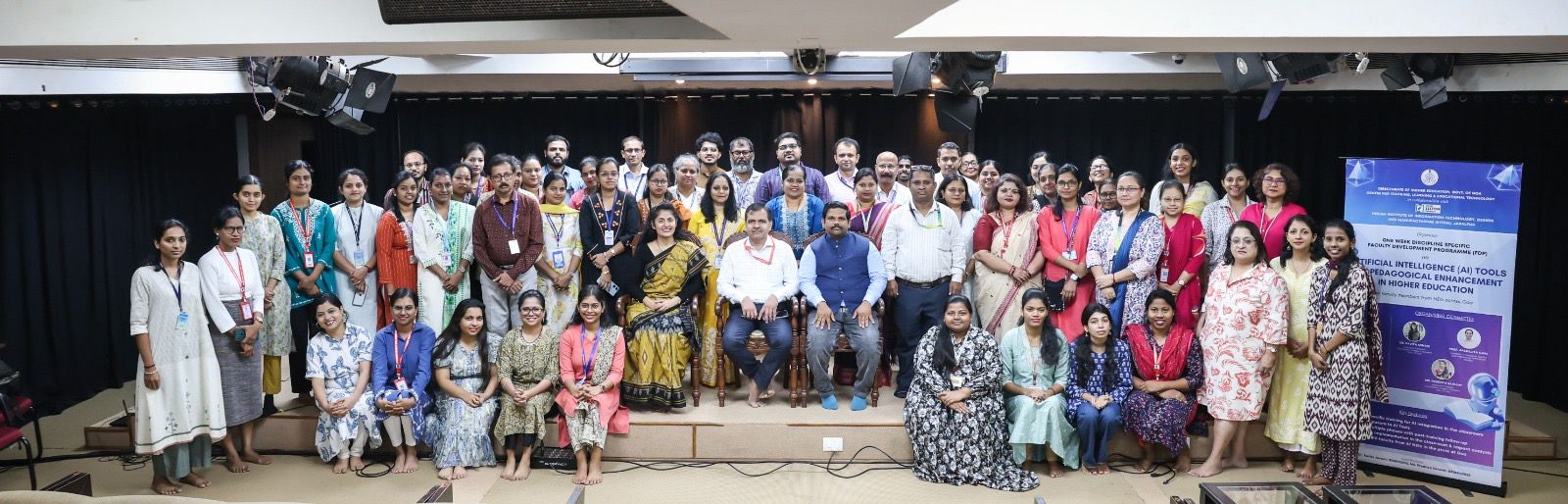
Panaji: The Directorate of Higher Education, Government of Goa, has introduced an extensive capacity building programme aimed at equipping college and university faculty with skills in artificial intelligence tools to enhance classroom teaching. The initiative focuses on helping educators integrate emerging technologies into academic practices in a systematic and discipline oriented manner.
Recognising that the use of artificial intelligence varies across fields of study, the directorate has designed a structured training model covering 69 disciplines grouped into six specialised clusters. The programme is being implemented in collaboration with the Indian Institute of Information Technology, Design and Manufacturing, Jabalpur, which has facilitated the involvement of national and international experts as resource persons.
The Faculty Development Programme has been organised as a series of one week sessions dedicated to each cluster. The first phase began in November 2025 with the Applied Sciences group, which included subjects such as engineering, computer science, electronics, architecture, agriculture, education, design, fine arts, culinary studies and hospitality. This phase received strong participation from institutions across the state and laid the foundation for the subsequent training modules.
The remaining clusters, covering science, social sciences, commerce and management, law, humanities and languages, were taken up in the second phase that commenced on January 12, 2026 and concluded on February 5, 2026. The sessions focused on practical applications of artificial intelligence in curriculum design, assessment methods, research support and student engagement.
Through this initiative, the Directorate of Higher Education intends to prepare around 500 faculty members from higher education institutions in Goa to adopt technology driven pedagogical practices. Officials believe that familiarity with artificial intelligence tools will help teachers redesign learning experiences, improve academic outcomes and remain aligned with global trends in higher education.
The programme forms part of a broader vision to modernise the state’s academic ecosystem and to ensure that educators are equipped to guide students in an increasingly digital and knowledge based environment.