Team Goemkarponn
PANAJI: Goa has taken a step towards giving its traditional crochet craft wider recognition and legal protection, with the State government initiating the process of obtaining a Geographical Indication (GI) tag for the distinctive handicraft.
The Department of Science, Technology and Waste Management has submitted an application for GI recognition of Goa Crochet Crafts on November 6, seeking to establish the craft’s identity and protect its traditional methods and cultural significance.
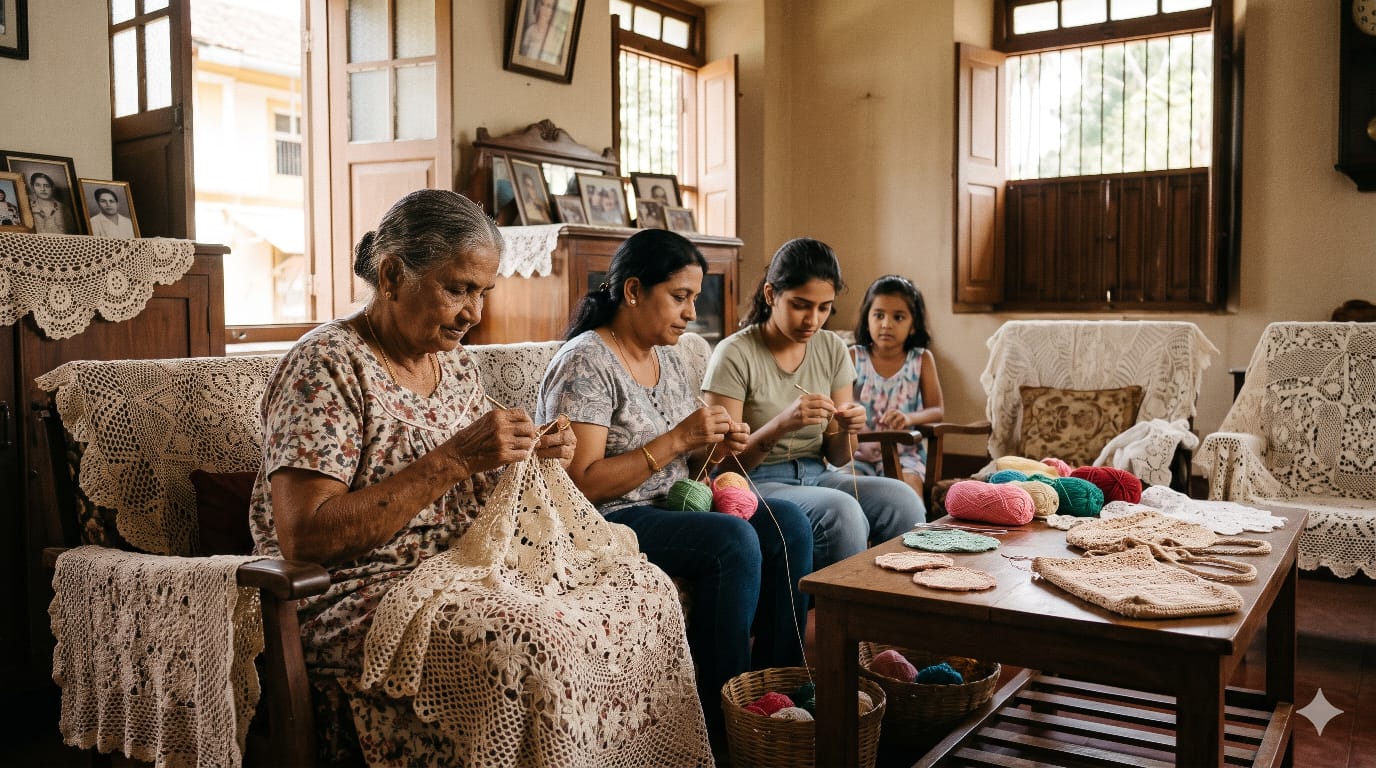
Crochet has long been associated with Goan homes, where women have passed down the skill through generations. Using a single crochet hook and thread, artisans produce a variety of handmade articles, including decorative linen, table covers, bedspreads, garments, bags, accessories and ornamental pieces.
The craft also has a special connection with Goan wedding customs. Handmade crochet articles are traditionally included in a bride’s wedding collection, known locally as dennem or vazze. Such collections can comprise between eight and 20 pieces, often painstakingly prepared by the bride herself or gifted by older women in the family.
Unlike mass-produced designs, traditional Goan crochet features intricate patterns created through individual skill and experience. Floral and geometric motifs are commonly used, with many artisans relying on patterns remembered and adapted through years of practice.
What was once largely a household activity has gradually developed into an income-generating occupation for women. Crochet products are now sold through cooperative societies, self-help groups, Mahila Mandals, exhibitions, local markets and online platforms.
The Industrial Handicrafts and Handloom Cooperative Society Ltd, established in 1980, has also contributed to supporting artisans by creating livelihood opportunities and encouraging the continuation of traditional crochet and embroidery alongside newer designs.
Over the years, the craft has adapted to changing consumer preferences. Some artisans have shifted towards thicker acrylic yarns, which allow them to complete larger products in comparatively less time. However, the finer crochet work traditionally associated with Goa is increasingly being practised by older artisans.
The proposed GI recognition is aimed at giving Goan crochet a distinct identity and safeguarding the traditional knowledge associated with its production. It could also help artisans gain wider market visibility and strengthen the economic value of their handmade products.
The initiative seeks to place Goa’s crochet tradition on a broader platform while ensuring that the skills and cultural practices developed over generations are not lost.