Team Goemkarponn
PANAJI: The 57th International Film Festival of India (IFFI) 2026 will celebrate the diversity and richness of Indian cinema while bringing urgent environmental concerns to the global screen through its specially curated ‘Mission Life’ section. The festival will be held in Goa from November 20 to 28 under the theme ‘Stories Without Borders’.
The festival aims to showcase India’s linguistic and regional storytelling diversity while using cinema as a medium to encourage conversations on ecological transformation, the relationship between humans and nature, and sustainable coexistence.
Indian cinema remains at the centre of this year’s festival programme. The Indian Panorama section will present 30 feature films, 20 non-feature films and five web series nominated for the Best Web Series (OTT) Award.
The feature film selection includes five mainstream films, five entries competing for the Best Debut Director of an Indian Feature Film award and selected titles under the New Horizon segment, featuring World, International, Asian and Indian premieres.
Indian films will also have a significant presence in the festival’s major competitive categories. *Kantara: A Legend – Chapter 1* (Kannada), *Paro – The Untold Story of Bride Slavery* (Hindi) and *The Kerala Story 2 Goes Beyond* (Hindi) will compete in the International Competition.
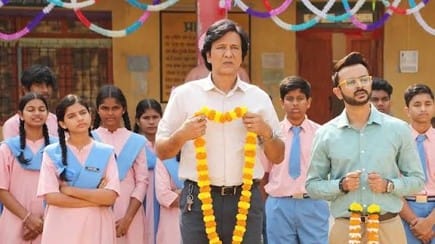
Meanwhile, *Birds on Ice* (Ladakhi) and *Sledge* (Kashmiri) will feature in the Best Debut Feature Film category. *Kabir Sir ka Akhri Lesson* (Hindi), *Player 5* (Tamil) and *Sev Micchar* (Hindi) will compete for the ICFT–UNESCO Gandhi Medal.
IFFI will also celebrate India’s cinematic heritage through centenary tributes to classics such as *Thulabharam*, *Sadhi Manase*, *Waqt*, *Kashmir Ki Kali* and *Chowringhee*. Golden Jubilee celebrations will honour *Bhakta Kannappa* and *Kabhi Kabhie*.
Special tributes will also be paid to veteran filmmakers and cinema personalities Bharathiraja, K. Bhagyaraj and Nana Patekar.
The festival will further encourage emerging talent through the sixth edition of Creative Minds of Tomorrow (CMOT), which will empower 100 young practitioners across 13 film crafts.
**Mission Life: Cinema and the Environment**
Complementing the celebration of Indian cinema, the dedicated Mission Life section will showcase five international films exploring ecological changes, human–non-human relationships and the need to rethink sustainable living.
The selection includes *Like Any Other Mortal (Como Todo Mortal)*, directed by María Molina Peiró. A Netherlands–Spain co-production, the film will have its Asia Premiere. Blending documentary, flamenco and science fiction, it draws parallels between the scars left by ancient mining activities in Andalusia and robotic exploration on Mars.
Another Asia Premiere is *Nunkui*, directed by Verenice Benítez and produced across Ecuador, Chile and Germany. The film follows a young girl from an Amazonian Shuar community who draws strength from ancestral songs, forest spirits and her community’s connection with nature as mining corporations encroach upon her homeland.
*The Clearing*, directed by Sabine Groenewegen, is a Netherlands–Indonesia production making its India Premiere. Through archival and contemporary footage, the film examines how Sumatra’s rainforests were transformed into rubber plantations during the colonial period, highlighting the continuing consequences of exploitation and resistance.
The Mission Life selection also features *Tropical Fractals (Fractais Tropicais)*, directed by Leonardo Pirondi. This Portugal–Brazil experimental science-fiction film, making its India Premiere, follows space-faring scientists and an artificial intelligence system studying Earth’s last surviving traces while a lone wanderer travels across a ruined planet that is beginning to heal.
Completing the selection is *We Are the Fruits of the Forest (Nous Sommes les Fruits de la Forêt)*, directed by renowned Cambodian-French filmmaker Rithy Panh. The documentary, making its India Premiere, portrays the Indigenous Bunong community in Cambodia’s remote mountains as its members strive to protect their ancestral traditions and fertile land amid corporate encroachment and climate-related agricultural challenges.
Through the combination of Indian cinematic heritage, emerging creative talent and international environmental storytelling, IFFI 2026 seeks to underline cinema’s role in promoting cultural understanding and global conversations on sustainability.
The festival’s approach also reflects the national vision of ‘Create in India for the World’, positioning Indian cinema and creative talent on the international stage while highlighting humanity’s shared responsibility towards the planet.