Team Goemkarponn
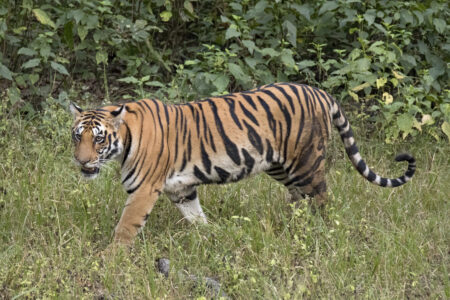
PANAJI: In a significant setback to Karnataka’s ambitious Kalsa-Bhandura drinking water initiative, the Union Ministry of Environment, Forest and Climate Change’s (MoEF&CC) Regional Empowered Committee (REC) has raised serious ecological concerns, warning that the project could harm the riverine ecology of the Mhadei River and reduce water flows into the ecologically sensitive Bhimgad Wildlife Sanctuary.
The REC, in its meeting on December 11, deferred a decision on Karnataka’s proposal to divert 28.44 hectares of forest land in Nerase village, Khanapur taluka. Despite pressure from farmers’ groups, the committee emphasized that the forest area identified for diversion is ecologically fragile and “inviolate,” even though it technically lies outside the sanctuary’s notified eco-sensitive zone (ESZ).
The committee also noted that farmers’ groups, including Ryatha Sena Karnataka, had threatened to protest if permission was not granted promptly. However, the REC remained firm, asking the Karnataka government to provide updates on various special leave petitions and interlocutory applications pending before the Supreme Court related to the Mhadei river diversion project.
“Implementation of the proposed project would result in reduced water flow to the sanctuary, potentially impacting the riverine ecology and surrounding areas,” the REC stated. The committee further directed the state government to submit detailed comments on the potential ecological impact and propose mitigation measures to protect the fragile ecosystem of Bhimgad Sanctuary.
Karnataka, through Neeravari Nigam Limited (KNNL), had requested forest land diversion for constructing a diversion weir, jackwell cum pump house, electric substation, pipeline, and powerline to channel Bandura Nala’s water to Hubli-Dharwad and surrounding areas as part of the Kalsa project.
The REC had earlier placed the proposal on hold in May, citing concerns over its proximity to the Bhimgad Wildlife Sanctuary. The proposed site lies just 29 metres from the sanctuary’s ESZ, and Decision Support System (DSS) analysis classifies it as ‘Inviolate I,’ a designation indicating high ecological sensitivity. The committee stressed that the area’s environmental fragility cannot be ignored simply because it falls slightly outside the ESZ.
The committee also raised concerns over the rehabilitation of 161 families residing within the sanctuary. It noted the absence of a comprehensive relocation plan and pointed out that the state government had not provided documentation showing villagers’ consent to move. “The proposed rehabilitation plan included in the Biodiversity and Wildlife Conservation Plan is incomplete,” the REC observed.
The state has now been directed to prepare a detailed, time-bound rehabilitation plan and provide a clear project implementation timeline before the REC can reconsider the proposal.