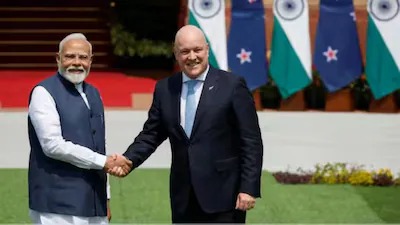
Wellington: New Zealand Prime Minister Christopher Luxon has welcomed a comprehensive free trade agreement with India, describing it as a significant economic milestone that opens access to a market of 1.4 billion consumers and strengthens ties between the two countries.
Luxon said the pact marks an important step in expanding trade and investment opportunities, particularly for New Zealand’s exporters in key sectors such as dairy, meat, seafood, wood products and wine. He underscored the potential for the agreement to boost economic growth, create jobs and deepen bilateral engagement across a range of industries.
The Prime Minister noted that India’s fast‑growing economy and rising consumer demand present substantial opportunities for New Zealand businesses of all sizes. He highlighted that enhanced market access will help exporters seize opportunities in sectors where New Zealand has competitive advantages and can meet Indian demand for high‑quality goods.
Officials said the agreement includes provisions to reduce or eliminate tariffs on a wide range of products over a phased period, offering greater price competitiveness for exporters. Luxon emphasised that this trade deal reflects shared interests in strengthening economic cooperation and building a resilient partnership that benefits both nations.
In addition to goods trade, the agreement is expected to facilitate increased collaboration in services, investment, technology and mobility. Luxon pointed out that these areas are critical for long‑term economic linkages and will support deeper people‑to‑people connections, educational exchanges, and business ties.
The New Zealand leader expressed confidence that the deal would reinforce the country’s strategic engagement with the broader Indo‑Pacific region. He said it aligns with efforts to diversify trade relationships and reduce dependency on traditional markets, while fostering stability and mutual prosperity.
Luxon also emphasised that strong regulatory and environmental standards were key priorities in negotiating the pact, ensuring that growth is sustainable and supports responsible business practices. He reiterated New Zealand’s commitment to upholding high standards in labour, environment and investment protections.
The Prime Minister acknowledged the role of negotiators, diplomats and industry stakeholders in shaping the agreement, saying their contributions were vital to reaching a comprehensive and balanced outcome. He added that ongoing consultations with key sectors will continue to ensure that businesses are well‑positioned to benefit from the new arrangement.
Officials expect the agreement to come into force after ratification processes in both countries are completed. Once implemented, New Zealand exporters are anticipated to gain improved access to Indian markets, while Indian companies may benefit from clearer pathways into New Zealand’s economy.
Luxon described the pact as a testament to the growing economic partnership between New Zealand and India, and expressed optimism about future cooperation across trade, innovation and investment. He said the agreement lays a foundation for mutually beneficial growth and reflects a shared commitment to expanding economic opportunities for both nations.