Rohtas (Bihar): A newly constructed ropeway in Bihar’s Rohtas district collapsed during a trial run on Friday, officials and residents said, triggering panic among workers and onlookers as the cable car system, built to transport people across a river valley, gave way without any passengers on board. The incident occurred when engineers and technicians were conducting a dry run to test the strength and functionality of the ropeway ahead of its planned inauguration for public use.
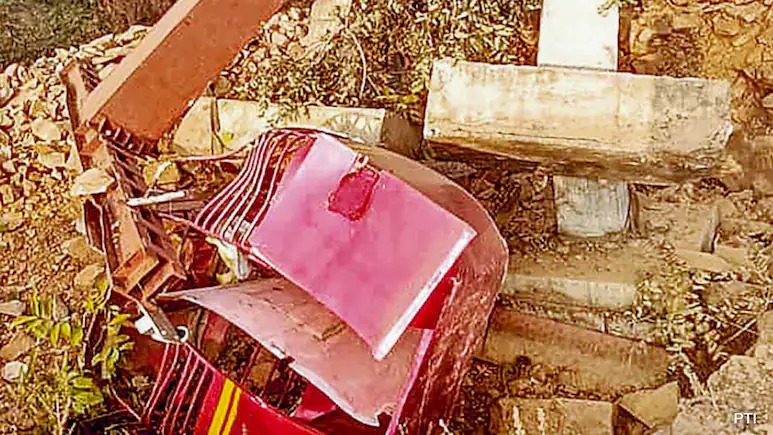
Eyewitnesses reported that one of the support cables snapped suddenly, sending the carriage and parts of the suspension system crashing to the ground. Although no passengers were present at the time, several workers and supervisors near the landing stations rushed to safety as alarm bells rang and parts of the structure fell. Local residents gathered around the site immediately after the collapse, expressing shock at the failure of the infrastructure project that had been touted as a landmark engineering achievement for the region.
Officials said that initial assessments indicated structural failure in one of the key cable lines, but a detailed inquiry has been ordered to determine the exact cause of the accident. Engineers from the company that constructed the ropeway, along with state public works department officials, have been tasked with examining the broken components and reviewing safety protocols to understand why the system gave way during a routine trial.
The ropeway project, designed to boost tourism and improve connectivity across the rugged terrain of the Kaimur hills and river valley, had generated significant local interest and expectations in recent months. It was intended to reduce travel time, provide scenic views to visitors, and offer an alternative transport option for residents. The collapse during the pre‑operational phase, however, has raised serious questions about the quality of materials used, the oversight of construction practices, and adherence to safety standards during installation and testing.
State authorities said that there were no reported injuries as a result of the collapse, and no casualties have been confirmed. Rescue teams and technical staff remained at the site throughout the day to secure the broken cable segments and examine the ropeway infrastructure. Local police have cordoned off the area to restrict public access while engineers carry out inspections and begin the process of dismantling damaged parts.
Several workers at the site said that they heard a loud bang before seeing the cable give way, and that their immediate reaction was to retreat to safer ground. One supervisor at the project expressed concern over future operations, stating that further testing and reinforcement of the entire ropeway system would be necessary before scheduling any inauguration or public trials.
Officials have appealed for calm among local residents and promised a thorough investigation to ensure accountability. A high‑level committee has been constituted to ascertain whether the collapse was due to technical fault, human error, substandard equipment, or other factors. This panel will also recommend corrective measures and a revised timetable for completion and safe operation.
The trial collapse has drawn attention from both political leaders and the public, with many urging transparency in the investigation and swift action to address safety concerns. State government representatives have assured residents that safety is the top priority and that no effort will be spared to ensure the ropeway meets all requisite standards before it is opened for public use.
As inquiries continue, the focus remains on understanding the reasons behind the failure during a controlled test run, reviewing construction oversight mechanisms, and reinforcing confidence in large‑scale infrastructure projects in the region.