The distinction between professional journalists and social media content creators has come under scrutiny after Delhi Police told the Supreme Court that Instagram influencers, YouTubers and reel-makers cannot automatically claim the protections extended to journalists.
The submission was made in an affidavit responding to petitions alleging that journalists were manhandled and harassed while covering protests against Chief Election Commissioner Gyanesh Kumar in Delhi.
Delhi Police argued that professional journalists form a distinct category from individuals carrying cameras and microphones to create content, including material intended for commercial purposes. It maintained that whether social media content creators could be recognised as journalists or reporters was a question that had yet to be determined.
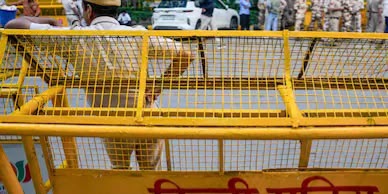
Defending its handling of the October protests, the police denied deliberately obstructing media coverage. It claimed that journalists representing national, international and regional media organisations, including those without official accreditation, were able to record the demonstrations.
The affidavit also referred to CCTV footage and police videography to support the claim that media personnel had access to the protest locations.
Police Raises Concerns Over Fake Journalist Claims
Delhi Police alleged that several individuals present at the protest sites were YouTube content creators and reel-makers rather than professional journalists. Their presence, it argued, made it difficult for police personnel to distinguish between media representatives and protesters amid large crowds.
The affidavit cited a video featuring a woman carrying a press card and microphone identification. Although she described herself as a student and journalist, she reportedly acknowledged that she was not yet a journalist.
Another video was cited in which an individual alleged that some YouTubers and media personnel were deliberately confronting police officers while attempting to record content.
Police Denies Deliberate Media Restrictions
The police maintained that individuals carrying cameras were not obstructed unless intervention was necessary to maintain public order. They were asked to maintain a reasonable distance from operational areas where personnel were managing the crowds.
It further stated that anyone detained due to mistaken identity was released after verification. The police also clarified that the absence of press accreditation or an identity card alone was not grounds for action.
According to the affidavit, restrictions were imposed under prohibitory orders and applied uniformly to everyone at the protest sites, irrespective of their professional identity.
Delhi Police has also submitted two Instagram video recordings before the Supreme Court to support its arguments.