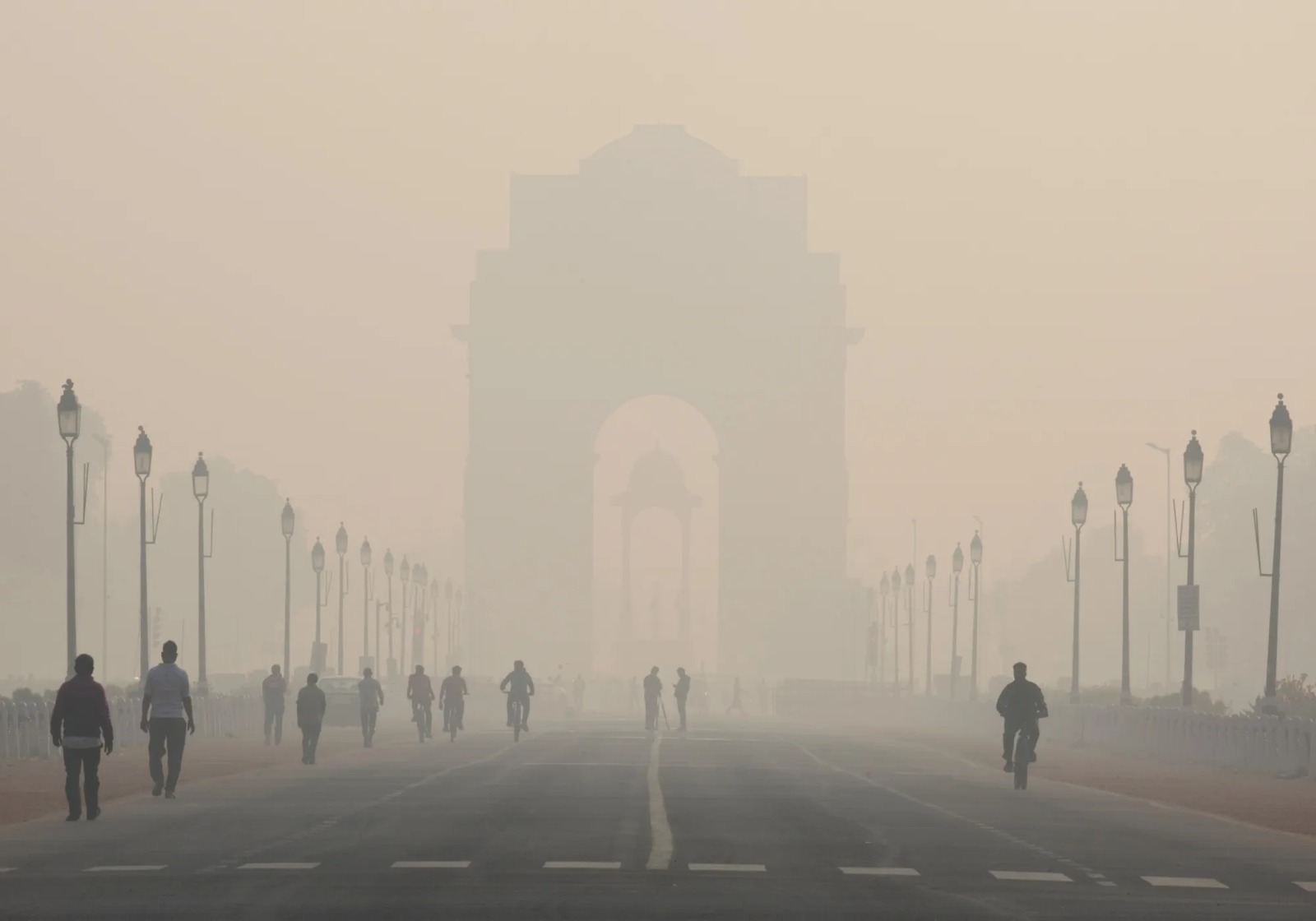
New Delhi: Dense smog returned to the national capital on Saturday as the air quality index climbed into the Very Poor category, prompting renewed public health concerns and heightening calls for heightened pollution control measures. Residents across the city woke up to a heavy blanket of haze that sharply reduced visibility and raised alarm among vulnerable groups, including children, the elderly, and people with respiratory issues.
Monitoring stations recorded a significant increase in particulate matter levels, with PM2.5 and PM10 concentrations surging well above safe limits. The deteriorating air quality comes amid seasonal changes, lower wind speeds, and cooler temperatures, conditions that are known to trap pollutants close to the ground and contribute to smog formation. Areas across the capital experienced thick grayish smog through the morning and early afternoon, with visibility dipping to under a few hundred meters in some localities.
Commuters reported a sharp decline in air clarity as they traveled to work, with many describing the atmosphere as “choking” and “hazardous to breathe.” Several schools in Delhi noted an increase in respiratory complaints among pupils, prompting parents to express concern over children being exposed to unhealthy outdoor air. Healthcare professionals also warned that prolonged exposure to poor air quality can trigger asthma, bronchitis, and other chronic respiratory conditions.
Authorities and environmental experts attributed the spike in pollution levels to a combination of factors, including vehicular emissions, industrial activity, dust from construction sites, and smoke from burning biomass or waste in surrounding regions. Wind patterns during the early winter months further aggravated the situation by limiting the dispersion of pollutants.
In response to the worsening conditions, the Delhi government and civic agencies urged residents to limit outdoor activities, particularly for vulnerable individuals. Officials advised the public to wear protective masks when stepping outdoors and to use air purifiers at home where possible. Meanwhile, enforcement agencies stepped up checks on vehicles to ensure compliance with emission norms, and increased water sprinkling on major roads to suppress dust.
Environmental regulators also appealed to citizens to avoid burning waste, urging them to utilise authorised garbage disposal services instead. Traffic police heightened monitoring for polluting vehicles, including those with visible emissions and those failing to meet pollution under control (PUC) certificate requirements.
Several urban local bodies announced plans to accelerate dust control measures at construction sites and to enhance green cover in identified hotspots to mitigate the impact of airborne particulates. Civic authorities reiterated they were closely monitoring real-time air quality data and assessing necessary interventions to address pollution levels.
Community groups and environmental activists called for stricter long-term measures, including curbs on diesel generators, expansion of public transport, and rapid deployment of cleaner fuels and electric vehicles to reduce the overall pollution burden. They emphasised that sustained public awareness and institutional coordination are essential to tackling recurring smog episodes.
As evening set in, the hazy conditions persisted, with residents reporting difficulty in breathing and a lingering smell of smoke in the air. Local health clinics reported a rise in patients with cough and breathing difficulty. Public health experts cautioned that unless significant measures are taken to curb emissions and control sources of pollution, episodes of very poor air quality could become more frequent during the winter season.
The return of smog to Delhi has once again underscored the challenges faced by the capital in managing air pollution and protecting public health, as authorities and citizens brace for days of compromised air quality ahead.