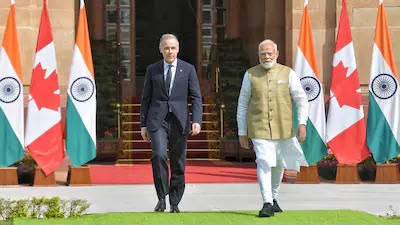
New Delhi: Prime Minister Narendra Modi’s proposed visit to Canada on December 11 and 12 could give fresh momentum to efforts to rebuild India-Canada relations, with a major trade agreement expected to take centre stage during his meeting with Canadian Prime Minister Mark Carney.
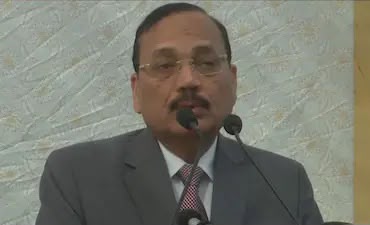
Ontario’s Minister of Economic Development, Job Creation and Trade, Victor Fedeli, has expressed confidence that both countries could conclude negotiations on the proposed Comprehensive Economic Partnership Agreement (CEPA) by the end of 2026. He described the agreement as an opportunity to strengthen economic cooperation after several years of diplomatic tensions.
Ontario, Canada’s largest provincial economy, accounts for approximately 40 per cent of the country’s population and has a strong presence in aerospace, automobiles, technology and advanced manufacturing. Fedeli believes closer trade ties with India could benefit businesses across these sectors.
The proposed agreement assumes greater importance as both countries aim to double bilateral trade to $70 billion by 2030. It is expected to improve market access, encourage investments and provide businesses with greater certainty.
Relations between the two countries deteriorated following the 2023 killing of Khalistani separatist Hardeep Singh Nijjar in British Columbia and subsequent allegations involving Indian government agents, which New Delhi rejected. Diplomatic expulsions and strained relations affected high-level engagement.
However, efforts towards normalisation gained momentum following Carney’s visit to India in March 2026, which helped establish a framework for renewed cooperation and formally launch CEPA negotiations.
The sixth round of trade negotiations concluded in New Delhi on November 20, covering goods, services, investment, intellectual property and rules of origin.
Fedeli revealed that Ontario’s two-way trade with India had grown by 88 per cent over eight years. The province operates trade offices in New Delhi and Mumbai and is exploring the possibility of establishing another office in the Bengaluru region.
Technology, artificial intelligence, life sciences and advanced manufacturing have emerged as key areas for collaboration. Ontario has around 1,600 AI companies, 1,700 students enrolled in AI master’s programmes and recorded 17,000 new AI-related employees in the previous year.
Defence manufacturing and aerospace are also expected to offer opportunities through joint ventures combining India’s Make in India initiative with Canada’s domestic manufacturing requirements.
Critical minerals could further strengthen cooperation. Ontario possesses important resources, including lithium and nickel, and has established a $500 million fund to support critical minerals processing and attract international investment.
As Modi’s visit approaches, Ontario is looking to build stronger business connections with India. Fedeli emphasised that mutual trust between businesses would be essential to making the renewed partnership successful, describing the present period as an opportunity for India and Canada to deepen their economic relationship.