Washington DC:
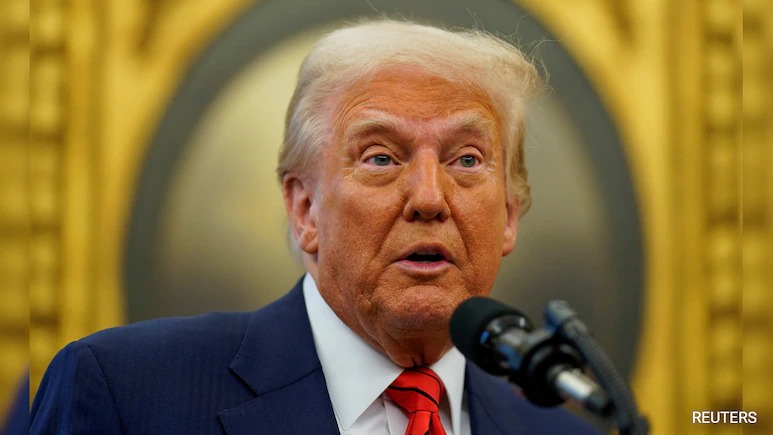
In a significant escalation of his trade policy, U.S. President Donald Trump has announced that the United States will impose a 25% tariff on all steel and aluminum imports starting Monday. This move is part of a broader strategy to match tariff rates levied by other countries, a policy Trump termed as “reciprocal trade.”
Trump revealed that he will unveil the details of these reciprocal tariffs as early as Tuesday, emphasizing that the U.S. will charge other countries the same tariffs they impose on American goods. This approach marks a substantial overhaul of U.S. trade policy, aiming to ensure that the country is treated evenly in international trade.
The new tariffs are likely to have a profound impact on Canada and Mexico, which are among the largest suppliers of steel and aluminum to the U.S. This move echoes Trump’s previous trade actions during his first term from 2016-2020, when he imposed similar tariffs on steel and aluminum, with some trading partners receiving duty-free quotas.
The 25% tariffs on steel and aluminum imports will take effect immediately, adding to the existing metal duties that are expected to be disclosed later in the week. Trump’s reciprocal tariff plan is designed to address the disparity in tariff rates between the U.S. and other countries. For instance, the U.S. has a 2.5% tariff on car imports, while the European Union imposes a 10% tariff on auto imports from the U.S.
During his first term, Trump had imposed a 25% tariff on steel and a 10% tariff on aluminum, with countries like Canada, Mexico, and Brazil receiving duty-free quotas. These quotas were later extended to Britain, Japan, and the European Union by former President Joe Biden. However, U.S. steel mill capacity utilization has declined in recent years.
Canada, Brazil, and Mexico are the top sources of U.S. steel imports, with Canada accounting for a significant 79% of primary aluminum metal imports to the U.S. in the first 11 months of 2024. Mexico is also a major supplier of aluminum scrap and aluminum alloy.
The U.S. trade-weighted average tariff rate stands at about 2.2%, which is significantly lower than many other countries, including the EU, India, Brazil, and Vietnam. Trump has frequently criticized the higher tariffs imposed by these countries, particularly the EU’s tariffs on auto imports.
The new tariffs have garnered mixed reactions, with Canadian Prime Minister Justin Trudeau and Mexican President Claudia Sheinbaum expressing strong opposition. The tariffs are intended to protect American industries and address broader issues such as illegal immigration and drug trafficking.