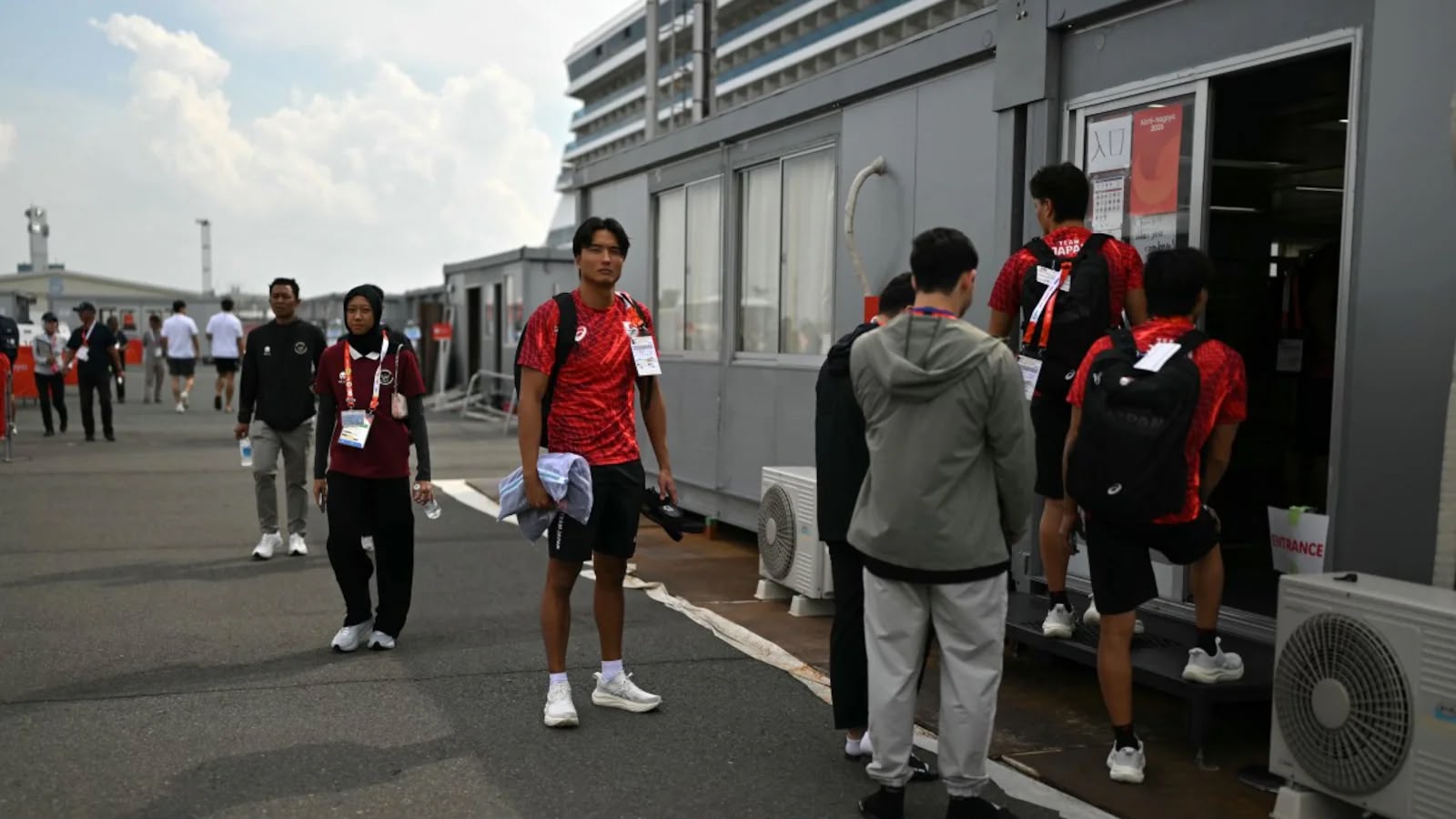
New Delhi: Japan’s Olympic chief has acknowledged that Asian Games organisers struggled to accommodate the large number of athletes and officials who arrived for the Aichi Nagoya Games.
Japanese Olympic Committee president Seiko Hashimoto said the number of participants was significantly higher than organisers had anticipated, creating difficulties with accommodation. Several teams had reported problems finding enough rooms for their delegations after arriving in the host region.
Organisers had expected around 15,000 athletes and officials to attend the Games, while the Olympic Council of Asia had placed the expected number above 17,000. The difference contributed to pressure on the accommodation arrangements.
Unlike many major multi sport events, the Aichi Nagoya Games did not have a dedicated athletes’ village. Organisers chose alternative accommodation arrangements as part of efforts to reduce costs. Participants were housed in temporary wooden structures, hotels and a cruise ship docked at Nagoya’s port.
Accommodation was not the only challenge during the Games. Transport arrangements also came under scrutiny, with reports of buses failing to arrive on time or taking athletes to incorrect venues. Some delegations faced long waits at the airport after arriving in Nagoya, with delays reportedly lasting several hours.
Attendance was another concern, with several competitions taking place in front of large numbers of empty seats despite stronger crowds at some events. The opening ceremony also saw significant areas of vacant seating.
Weather conditions added to the difficulties, with persistent rain and the threat of a typhoon affecting the Games at various stages.
The challenges have provided organisers with several areas to examine ahead of future major sporting events in Japan. The experience is expected to lead to a detailed review of accommodation, transport, attendance and overall event management.