Suraj Nandrekar
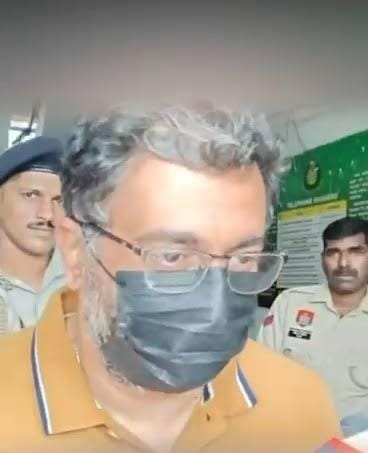
PANAJI: Who is Sadiq Siraj Dodamani? What brought a businessman from Hubballi in Karnataka to Azossim-Mandur? And how did his name allegedly find its way into the tenancy records of over 1.15 lakh square metres of Comunidade land in St Andre constituency?
These are the questions that have triggered a major political and public controversy in Goa, with villagers demanding answers from the government and the Revenue Department.
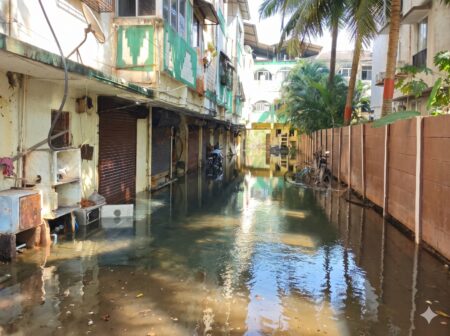
Dodamani, whose surname is also spelt Doddamani, Dodamandi and Dodmani, is a businessman based in Hubballi, Karnataka. He has come under the spotlight after his name allegedly appeared as a tenant in the Form I and XIV records covering a vast stretch of Comunidade land at Azossim-Mandur.
But the bigger question is not merely who Dodamani is. It is how a businessman from outside Goa came to claim tenancy rights over such a large area of traditional village community property.
The disputed land reportedly covers approximately 1.15 lakh square metres, involving Survey Nos. 64/1 and 6. Villagers have questioned the circumstances under which his tenancy claim was processed and the documents relied upon by the authorities.
The controversy has become particularly contentious because local families have reportedly been pursuing their tenancy claims for nearly three decades, while Dodamani’s case allegedly moved through the administrative process in just four months.
This contrast has raised serious questions about whether the same standards and procedures were applied to all applicants.
HOW DID HIS NAME ENTER THE RECORDS?
The crucial question now facing the Revenue Department is the sequence of events that led to Dodamani’s name being recorded as a tenant.
What was the basis of his original application? Was he cultivating the land? Did he establish possession through documentary evidence? Who verified the documents? Were the Comunidade authorities consulted? Were objections from villagers considered before the tenancy order was passed?
These are not minor administrative questions. They go to the heart of how tenancy rights over traditional agricultural land are established.
Villagers have alleged that the proceedings involved forged documents and questioned the speed with which the Joint Mamlatdar processed the matter. These allegations require an independent investigation and cannot be treated as established facts without verification.
The tenancy order dated May 27, 2026, and the subsequent purchase order dated October 9, 2026, have become important milestones in the dispute. The authorities must explain the reasoning behind these decisions and the material on which they were based.
A SYSTEM THAT NEEDS EXPLANATIONS
The controversy has also raised questions about the protection of Comunidade property.
Comunidades are among Goa’s oldest traditional village institutions. Their lands carry historical, agricultural and community significance. Any claim involving such extensive property must be examined with the highest degree of transparency.
How could a claim involving over 1.15 lakh square metres progress without the concerns of the local community being adequately addressed?
Did the authorities conduct proper verification? Was there any inquiry into the claimant’s connection with the land? Were the original records examined before the tenancy rights were recognised?
The government cannot answer these questions merely by announcing the cancellation of the tenancy.
Following the public backlash, Chief Minister Dr Pramod Sawant announced that the tenancy rights granted to Dodamani would be cancelled. The Tiswadi Deputy Collector subsequently intervened and stayed the proposed land transfer.
At the November 24 hearing, villagers filed an intervention petition opposing the proposed transfer. The stay was continued, with the next hearing scheduled for December 1.
POLITICAL QUESTIONS, BUT THE ADMINISTRATIVE TRAIL MATTERS
The controversy has also triggered political tensions in St Andre.
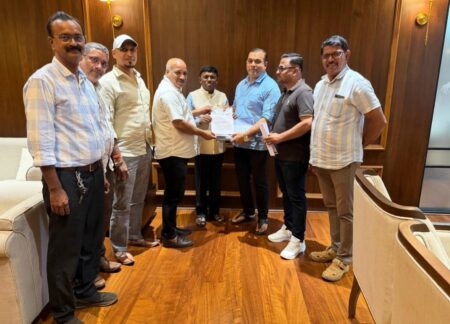
Former RGP chief Manoj Parab, party treasurer Ajay Kholkar, former MLA Francisco Silveira, Ramrao Wagh and Congress leader Mohan Dhond were among those associated with protests outside the North Goa Collectorate.
Kholkar has separately questioned how Dodamani became the lessee of the Dhamda Sluice Gate at Dongrim, also known as a manas. Farmers have raised concerns over saline water entering agricultural fields and affecting paddy cultivation in Dongrim and Azossim.
The issue has also resulted in a public disagreement within the RGP, with Parab and Kholkar questioning sitting MLA Viresh Borkar over his silence and raising allegations concerning his brother, Saish Borkar. These allegations too require verification.
But beyond the political exchanges, the fundamental issue remains the same: how did Dodamani’s name enter the land records, who approved it and on what evidence?
The December 1 hearing will be another important stage in the proceedings. However, Goa needs more than a temporary stay or political assurances.
It needs the complete administrative record, an examination of the documents submitted, accountability wherever irregularities are established and protection of the rights of the local community.
The question confronting the government is straightforward: If local families have waited decades for their tenancy claims, how did a businessman from Hubballi allegedly secure rights over 1.15 lakh square metres of Comunidade land in a matter of months?