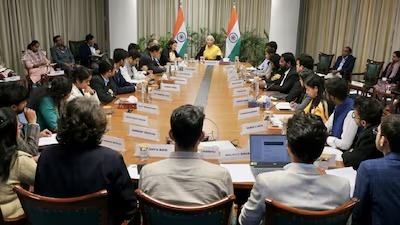
New Delhi: The Dravida Munnetra Kazhagam (DMK) has announced its support for the Centre’s proposed delimitation bill, giving the ruling side a significant boost ahead of its introduction in Parliament next week. The decision marks a major shift in the position of the Tamil Nadu-based party, which had strongly opposed the earlier delimitation exercise.
The decision was taken during a meeting of DMK MPs on Saturday morning. Following the meeting, party leaders A Raja and Dayanidhi Maran confirmed that the party would support the fresh bill when it is presented in Parliament.
The DMK’s support is significant as the party has 22 MPs and had previously been among the strongest voices opposing population-based delimitation. Its decision strengthens the government’s position as it prepares to make another attempt after the earlier bill was defeated in April.
The change in stance follows the Centre’s inclusion of a provision for a 50 per cent increase in parliamentary seats across all states. The government has also agreed to a 25-year freeze on the distribution of seats, addressing some of the concerns raised by southern states.
The DMK has indicated that it is comfortable with Tamil Nadu retaining its existing 7.2 per cent share of representation in Parliament, even as the state’s Lok Sabha seats increase from 39 to 59 under the proposed arrangement.
DMK chief MK Stalin had reiterated the party’s position on Friday, recalling his efforts to bring together chief ministers and representatives of states concerned about the impact of population-based delimitation. He maintained that Tamil Nadu’s existing 7.18 per cent share of Lok Sabha representation must be protected and that the distribution based on the 1971 Census should remain unchanged for another 25 years.
The party has clarified that its support does not represent a compromise on its fundamental demand. It has also rejected suggestions that its decision was influenced by its political separation from the Congress in Tamil Nadu, maintaining that fair representation remains its primary concern.