Team Goemkarponn
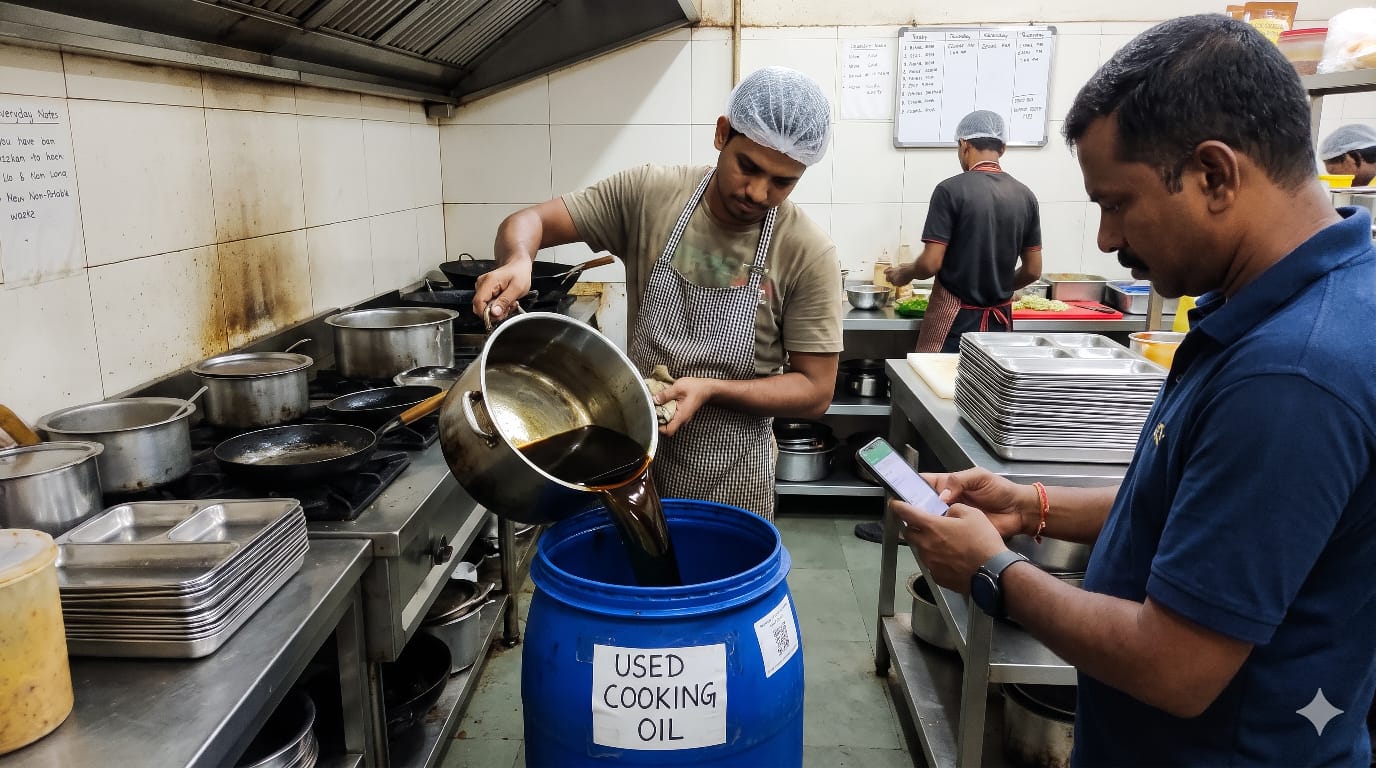
PANAJI: In a step aimed at tightening oversight of waste cooking oil, the Goa government has introduced compulsory digital recording of its movement and transactions, bringing food establishments and agencies handling the discarded oil under a common monitoring system.
The Department of Environment and Climate Change has issued directions under Section 5 of the Environment (Protection) Act, 1986, requiring every stage of the used cooking oil chain to be documented on a digital platform developed by the Goa Energy Development Agency (GEDA).
The system will cover the entire process, beginning with the generation of waste oil at food establishments and extending to its collection, storage, transportation, transfer and eventual processing or disposal. The objective is to establish a verifiable record of its movement and stop discarded cooking oil from finding its way back into kitchens.
For implementing the arrangement, the government has brought BiofuelCircle on board as GEDA’s authorised partner. The company will facilitate the collection, aggregation and sale of used cooking oil through the designated platform, with the larger objective of channelling the waste into biodiesel production.
GEDA, working with its authorised partner, will also coordinate the registration of businesses generating used cooking oil and the agencies involved in its collection, transportation, aggregation and processing.
The requirement extends to a wide range of food businesses, including hotels, restaurants, catering establishments, canteens, food processing units and street food vendors. Other establishments generating used cooking oil in the State will also have to follow the prescribed system.
Businesses and agencies handling the discarded oil will be required to adhere to the procedures and standards laid down by GEDA and the relevant environmental and statutory authorities. Non-compliance could invite legal action under the applicable provisions.
The intervention also addresses concerns over the health implications of repeatedly frying food in the same oil. Repeated heating causes the accumulation of Total Polar Compounds (TPC), which can make cooking oil harmful for consumption.
As per Food Safety and Standards Authority of India (FSSAI) norms, oil containing more than 25 per cent TPC is considered unsuitable for further use in cooking.
The responsibility for overseeing the implementation has been assigned to several government agencies, including the Goa State Pollution Control Board, Tourism Department, Directorate of Food and Drugs Administration, GEDA and Directorate of Municipal Administration.
The Restaurant Association and Travel and Tourism Association of Goa have also been included in the compliance and monitoring exercise.
With the digital mechanism, the government intends to bring greater accountability to the disposal of commercial kitchen waste while creating a more organised channel for recovering used cooking oil as a resource for alternative fuel production.