Team Goemkarponn
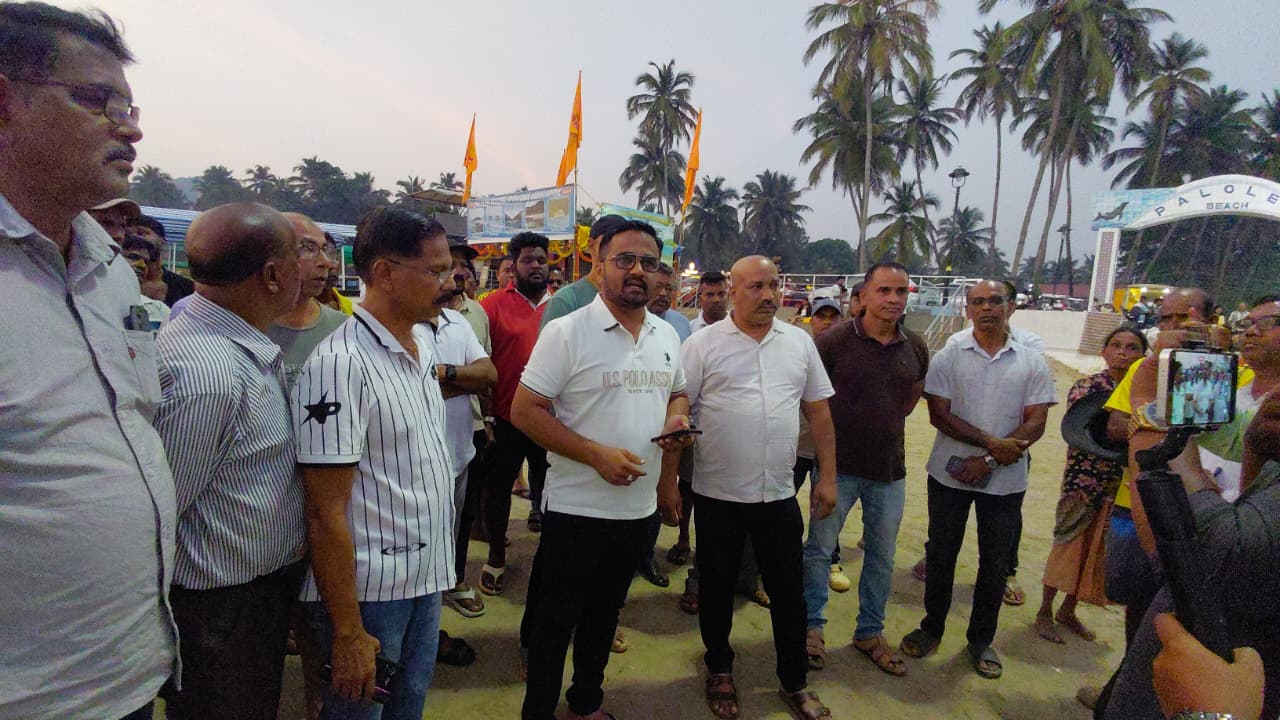
CANACONA: The Forest Department’s reported proposal to include Palolem beach under the turtle nesting site category in the Coastal Regulation Zone (CRZ) 2019 notification has triggered strong opposition among local residents and tourism stakeholders, who fear the move could severely impact tourism, employment and livelihoods. Residents have expressed shock and disbelief over the proposal, stating that declaring Palolem a turtle nesting area would create additional restrictions for tourism-related activities and businesses. They have vowed to oppose the move if the government proceeds with the proposal reportedly submitted by the Forest Department to the Ministry of Environment. The proposal reportedly seeks to bring eight coastal stretches in Canacona under the turtle conservation programme, including the already recognised nesting sites of Agonda and Galgibaga, along with Rajbag, Cabo de Rama, Khola, Patnem, Palolem and Talpona. This would cover almost the entire Canacona coastline, except the southern beach cove of Polem. The inclusion of Palolem and Patnem, which together form the coastal stretch of Canacona Municipality, has particularly angered residents. Locals questioned the rationale behind identifying these beaches as turtle nesting areas. “We have grown up on this beach and never in our lifetime have we seen turtles arriving at Palolem beach to lay eggs. If not for poor management, what other reason could have prompted the Forest Department to recommend a municipal beach for turtle nesting?” asked former Canacona Municipal Council (CMC) chairperson Simon Rebello. The opposition to the proposal is gaining momentum, with residents and tourism stakeholders assembling at Palolem beach to highlight the difficulties that could arise if the beach is notified as a turtle nesting area. “How can the government even think of such a move, particularly at Palolem, which has recently been recognised as Asia’s top beach destination and ranked sixth among the world’s best beaches?” questioned prominent tourism stakeholder Pankaj Naik Gaunkar. Former CMC chairperson Ramakant Naik Gaunkar said that tourism operators were already facing difficulties in obtaining the necessary permissions to conduct their businesses. He warned that the proposed restrictions could multiply these hurdles and eventually lead to the decline of tourism activities, affecting businesses and employment opportunities. Residents maintained that tourism remains the primary source of livelihood for a large section of Canacona’s population and that any additional restrictions could have serious economic consequences. The residents have resolved to approach Chief Minister Dr Pramod Sawant, the Urban Development Minister, the Environment Minister and Canacona MLA and Minister Ramesh Tawadkar, urging them to intervene and stop the proposal at the initial stage. Former CMC councillor Apociano Diniz warned that the move could affect the entire economy of Canacona and trigger widespread uncertainty among families dependent on tourism. “Where the government cannot provide jobs, how will it compensate families whose only source of livelihood depends on tourism?” he questioned. Pankaj Naik Gaunkar demanded that the government withdraw the proposal and introduce a single-window clearance system to facilitate tourism-related businesses. Babal Pagia, representing the fishing community, said the government should also consider the interests of fishing families, particularly the younger generation, who increasingly depend on dolphin trips and water sports-related tourism activities for their livelihood as traditional fishing has declined. Several residents, including Socky Da Silva, Nandeep Bhagat and others, gathered near the main entrance of Palolem beach to register their opposition to the reported proposal to include eight beaches in the turtle conservation programme. The residents have urged the government to reconsider the proposal, warning that any decision affecting the coastline must take into account the livelihoods and economic interests of the local population.