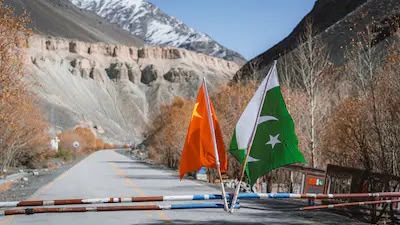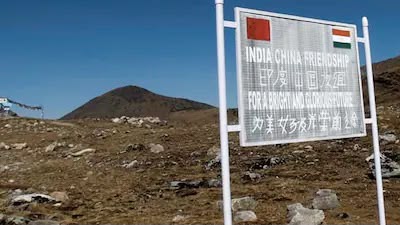
New Delhi: India and China have held another round of high-level military discussions along their disputed frontier in Arunachal Pradesh as both countries seek to prevent localised confrontations from escalating into a larger military standoff ahead of the winter season.
The Indian delegation was led by Lieutenant General Girish Kalia, General Officer Commanding of the Army’s III Corps, headquartered at Dimapur in Nagaland. His Chinese counterpart and other military officials participated in the discussions. An official from India’s Ministry of External Affairs was also present.
The primary objective of the meeting was to establish clear engagement protocols between the two militaries, reduce friction between patrolling teams and maintain communication channels. Both sides also discussed measures to ensure that local confrontations do not develop into wider military tensions.
The latest meeting marks the second round of Corps Commander-level discussions in the eastern sector. The first round was held on September 6 and 7 at the Wacha-Damai Border Personnel Meeting Points in Arunachal Pradesh. The discussions took place amid reports of increased tensions in the Taksing area of Upper Subansiri district.
Face-offs Reported at Multiple Locations
Concerns over the border situation increased after former Indo-Tibetan Border Police Director General Shatrujeet Kapur acknowledged that Indian and Chinese troops had faced each other at several locations along the Arunachal Pradesh frontier.
The Ministry of External Affairs subsequently stated that disturbances along the Line of Actual Control periodically occur when Chinese forces move away from established patrolling patterns. India has consistently maintained that unilateral attempts to alter the existing border situation are unacceptable.
Arunachal Pradesh Chief Minister Pema Khandu has also acknowledged that transgressions continue along the frontier, while maintaining that Indian security forces are effectively protecting the region.
Why Arunachal Pradesh Remains Disputed
The boundary disagreement largely stems from China’s refusal to recognise the McMahon Line, established under the 1914 Simla Convention. India considers the line its recognised boundary in the eastern sector.
China claims Arunachal Pradesh as part of its territory under the name Zangnan or South Tibet. India has firmly rejected these claims, maintaining that Arunachal Pradesh is an integral part of the country.
The latest military engagement comes amid continuing diplomatic efforts to stabilise bilateral relations, which deteriorated sharply following the deadly Galwan Valley clash in June 2020.
National Security Adviser Ajit Doval and Chinese Foreign Minister Wang Yi have also held discussions as special representatives for boundary negotiations.
Although previous diplomatic and military engagements have helped ease tensions in certain areas, the eastern frontier remains sensitive. With no mutually agreed boundary in place, India and China continue to rely on military communication and diplomatic negotiations to prevent further confrontations.