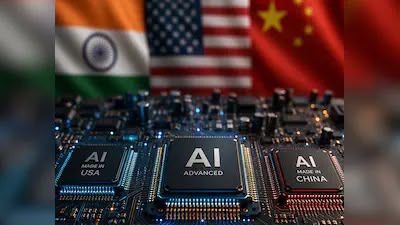
New Delhi: India has joined a US-led international initiative aimed at protecting critical artificial intelligence (AI) technologies and supply chains from potential Chinese influence, marking a significant development in the global technology race.
The agreement, known as the San Francisco Declaration on the Secure Foundations of Enduring Prosperity, has been signed by the United States, India, Japan, Australia, Israel, the United Kingdom, South Korea, Qatar and the United Arab Emirates. Germany, Sweden, the Netherlands and the European Commission are also expected to join the initiative.
The development comes amid growing concerns in Washington over China’s access to advanced AI chips, particularly those manufactured by Nvidia. US President Donald Trump has reportedly ordered stricter action against companies suspected of illegally transferring Nvidia’s advanced processors to China.
What Is Pax Silica?
The declaration represents a new phase of Pax Silica, a US-led initiative launched in December 2025 to strengthen AI supply chains and reduce dependence on critical infrastructure controlled by China.
The initiative covers several strategic sectors, including semiconductors, critical minerals, advanced manufacturing, energy infrastructure and data centres.
Global AI supply chains involve multiple countries, with chip design, manufacturing equipment, production and transportation often spread across different regions. This makes international cooperation essential to identifying vulnerabilities and protecting critical technologies.
Under the agreement, participating countries will establish working groups to identify supply chain risks, exchange information and explore opportunities to develop economic hubs capable of attracting investments in AI-related industries.
Why India’s Participation Matters
India’s participation could strengthen its position in the global technology ecosystem as the country looks to expand semiconductor manufacturing, AI infrastructure and domestic technological capabilities.
New Delhi formally joined Pax Silica in February 2026 during the India AI Impact Summit. The partnership could create opportunities for Indian companies to enter trusted international supply chains, attract investments and collaborate with major global technology firms.
However, joining the initiative does not automatically guarantee domestic semiconductor production or eliminate dependence on foreign technology. India will still need to strengthen manufacturing capabilities, secure critical mineral supplies and develop infrastructure to support its growing AI ambitions.
The agreement reflects a broader shift in the global AI race, with countries increasingly treating semiconductors, computing infrastructure, critical minerals and energy resources as strategic assets rather than purely commercial interests.