The growing political assertion of migrant communities in Goa is no longer something that can be ignored. The demand for representation by the Kannada community raises important questions about identity, electoral politics and the future of Goan political leadership.
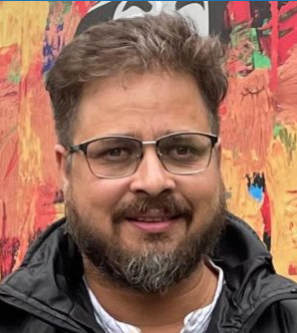
¯¯The recent Karnataka Rajyotsava celebrations at Sancoale may have been a cultural event, but the political message delivered from the platform deserves far greater attention. When Supreme Court lawyer Sandeep Patil called upon Kannadigas residing in Goa to stand firmly with the state on the Mhadei River dispute, while simultaneously urging the community to develop its own political leadership, it was more than an appeal for cultural unity. It was a statement about the changing political aspirations of a community that has become an important part of Goa’s social and economic landscape.
Perhaps Goa should begin asking an uncomfortable but necessary question: Are we moving towards a situation where the state could elect a Kannadiga MLA?
The possibility cannot be dismissed. In fact, considering the growing population of people from outside Goa, particularly Karnataka, Maharashtra and other states, their increasing participation in the state’s economic activities and their gradual social integration, such a political development may only be a matter of time.
Goa has traditionally been a state where political identities were shaped by language, regional belonging, village connections and community networks. Konkani identity, Goan heritage and local roots have played a significant role in determining electoral outcomes. But the state’s demographic and social realities are changing rapidly.
Thousands of people from neighbouring Karnataka have made Goa their home. They work in construction, hospitality, transportation, trade, hospitality services and several other sectors. Many have lived here for decades. Their children are growing up in Goa, attending local schools and becoming part of the state’s everyday social life. They are no longer merely a temporary workforce. Many are permanent residents with legitimate aspirations concerning their future.
It would therefore be politically naive to assume that this growing community will remain confined to economic participation without seeking political representation.
What Sandeep Patil said is significant because he has openly spoken about the need for a Kannadiga leader who can represent the community at higher political levels. This is an indication that the community is beginning to think beyond cultural celebrations and social organisations. It wants a political voice.
There is nothing inherently wrong with that aspiration. Democracy allows every eligible voter to participate, contest elections and seek public office. A person’s linguistic or cultural background cannot be a disqualification for political leadership.
However, the larger question is whether Goa’s established political class has understood the changing realities.
For years, political parties have courted migrant communities during elections, often recognising their numerical strength only when votes are required. Their concerns about housing, employment, civic amenities, education and social security are rarely addressed with the same urgency as electoral calculations. Political representation, therefore, becomes a natural next step when communities begin organising themselves.
The Mhadei reference at the Rajyotsava function is particularly interesting. Patil’s appeal that Kannadigas should support Goa’s interests on the river dispute is an attempt to underline that cultural identity and political loyalty need not be contradictory. A person can retain Kannada language and cultural traditions while standing with Goa on issues affecting the state’s future.
That message deserves recognition. Goa’s fight to protect the Mhadei cannot be reduced to a linguistic contest between Kannadigas and Goans. It is an environmental, ecological and livelihood issue that concerns everyone who calls Goa home. The river is not the property of any political party or linguistic community. Its protection is a collective responsibility.
At the same time, Goa must be careful not to allow demographic changes to become an excuse for divisive politics. The issue is not whether a Kannadiga, Maharashtrian or someone from another community can become an MLA. The real question is whether the person elected understands Goa, respects its identity, protects its interests and remains accountable to its people.
But there is also a message for Goa’s politicians. If established political parties continue taking local communities and their concerns for granted, new political leadership will emerge from spaces they have neglected. The growing assertion of the Kannada community should be seen in that context.
Goa is changing. Its political landscape will change with it. The emergence of a Kannadiga MLA may no longer be an improbable political scenario.
The bigger concern is whether Goa’s traditional political leadership is prepared for this transformation, or whether it will wake up only when the electoral arithmetic begins to change.
Cultural identity deserves protection. Political aspirations deserve democratic space. But above everything else, Goa’s interests must remain paramount, irrespective of who occupies the corridors of political power.