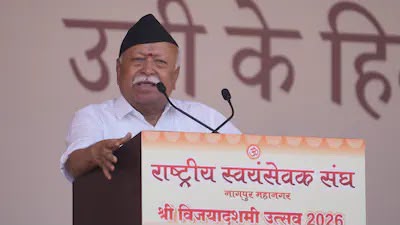
Jodhpur: Rashtriya Swayamsevak Sangh (RSS) chief Mohan Bhagwat on Sunday warned that attempts were being made to weaken India by highlighting smaller identities and provoking conflicts within society, drawing a comparison with the British policy of divide and rule.
Addressing the ‘Maru Ninad-2026’ Ghosh Shivir organised by the RSS Jodhpur Prant at Rajaram Ashram in Shikarpura, Bhagwat said India was progressing in the right direction, but certain global forces did not want the country to emerge as a great power.
He described India as a source of hope for the world but cautioned that efforts were being made to create divisions among people for selfish interests. He urged society to remain united and avoid falling victim to attempts that could create internal conflicts.
Emphasising the importance of collective strength, Bhagwat called upon people to overcome selfishness, narrow differences and personal ego. He stressed the need to build an organised society based on Dharma, discipline and service to the nation.
Referring to the Mahabharata, the RSS chief highlighted how the Kauravas lost despite having a larger army and experienced warriors, including Bhishma, Dronacharya, Karna and Ashwatthama. In contrast, the Pandavas emerged victorious despite having a smaller force because they maintained unity and resolved their differences.
Bhagwat also underlined the importance of developing strong grassroots leadership. He said every village, street and neighbourhood should have between 25 and 100 selfless individuals with strong character who remain committed to serving society during both difficult and happy times.
He explained that actions gradually shape habits, habits influence nature and nature ultimately builds character, describing character as the foundation of genuine strength.
Speaking about the RSS Ghosh tradition, Bhagwat traced the significance of martial music to ancient Indian traditions and references in the Mahabharata, including the sacred conches Panchajanya and Devadatta mentioned in the Bhagavad Gita.
He noted that the RSS initially adopted tunes inspired by British military bands but later developed original compositions based on Indian classical music traditions. He said the purpose of the performances was not personal recognition but to promote discipline, teamwork, selflessness and collective progress.