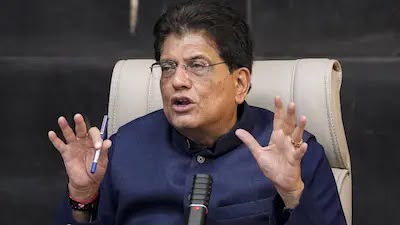
New Delhi: India is facing an acute shortage of civilian aircraft and is prepared to place orders for another 1,000 planes to meet the country’s rapidly expanding aviation requirements, Union Commerce and Industry Minister Piyush Goyal said on Monday.
Speaking during his two-day visit to Egypt, Goyal highlighted the growing demand for air connectivity and the need to accelerate aircraft deliveries. He said India had already placed orders for more than 1,200 aircraft and was prepared to order another 1,000 to strengthen its aviation capacity.
According to the minister, India’s total aircraft requirement exceeds 2,000, making faster deliveries from established global manufacturers a major priority. The government is pursuing leading aircraft companies to speed up supplies and help airlines expand their operations.
Goyal also highlighted the potential for stronger air connectivity between India and Egypt. He said additional aircraft would allow airlines to introduce more flights between the two countries, supporting tourism, trade and business exchanges.
Currently, EgyptAir operates direct flights connecting India and Egypt.
India is among the world’s fastest-growing civil aviation markets, with domestic carriers IndiGo and Air India having placed substantial aircraft orders with Airbus and Boeing to support their expansion plans.
Global aerospace manufacturers are also strengthening their presence in India. Airbus operates two final assembly lines in the country, covering military transport aircraft and helicopters.
Meanwhile, Boeing and Airbus collectively procure components and services worth approximately $2 billion annually from Indian suppliers, highlighting the country’s growing role in the global aerospace supply chain.
Brazilian aircraft manufacturer Embraer has also entered into a strategic partnership with the Adani Group to explore regional aircraft manufacturing in India.
With rising passenger traffic, expanding airline networks and growing international demand, India is seeking to increase aircraft availability while developing its domestic aerospace manufacturing capabilities. Faster deliveries and additional aircraft orders are expected to play a crucial role in meeting the country’s long-term aviation requirements.