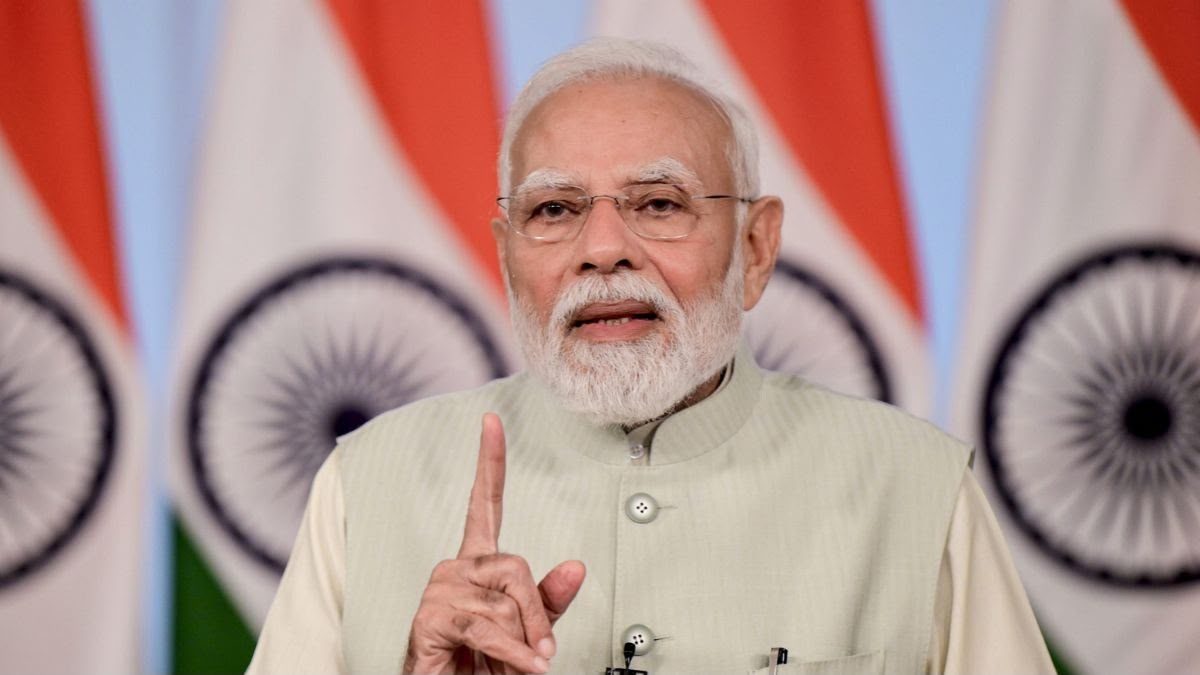
New Delhi: India has strengthened its position as Asia’s third most powerful country, while Prime Minister Narendra Modi has been ranked the region’s second most effective leader, behind Chinese President Xi Jinping, according to the 2026 Asia Power Index released by Australia’s Lowy Institute.
The report highlighted India’s improving economic outlook, diplomatic influence, defence partnerships and cultural reach. It also noted that India has narrowed the gap between its available resources and its actual influence, marking its strongest performance in this measure since the index was introduced in 2018.
Although China continues to hold an overall power advantage of around 80 per cent over India, the gap between the two countries has reached its narrowest level in the index’s history.
India recorded improvements in five of the eight measures used to assess regional power, while the remaining three registered marginal declines. Diplomatic influence continued to be the country’s strongest and most consistent area of performance, even as several other Asian nations experienced setbacks.
The report also highlighted India’s expanding defence networks and cultural influence. Growing defence engagement and BrahMos missile sales to Southeast Asian countries helped India improve its regional defence position, placing it ninth in that category.
India’s cultural influence increased to 43.8 points, supported by improvements in cultural projection, information flows and people-to-people exchanges.
Hunter Marston, director of the Southeast Asia Program at the Lowy Institute and lead of the Asia Power Index project, said India’s overall score had risen to 40.5, reinforcing its position as a major Asian power. He also highlighted Modi’s ranking as the region’s second most effective leader.
However, the report identified certain economic and diplomatic challenges. These included a weakening rupee, changes in the International Monetary Fund’s economic measurement methods and a decline of nearly $20 billion in India’s outbound investments.
It also observed that perceptions of Modi’s leadership and strategic ambitions had weakened slightly, reflecting India’s relatively lower diplomatic profile during the Gulf conflict.
The 2026 index assesses 27 countries and territories using 131 indicators across eight categories, including economic and military capabilities, resilience, diplomatic influence, future resources, defence networks and economic relationships.
Meanwhile, China has continued to narrow its military power gap with the United States. The index placed America’s comprehensive power score at 78.9, compared with China’s 73.6, leaving a difference of just 5.3 points.
China’s expanding military and maritime capabilities, along with its growing economic strength, have further strengthened its position in Asia as Washington faces competing strategic priorities in the Middle East.